You are moving funds on an unfamiliar Layer 2 from a U.S. wallet, and the transaction appears ordinary: approve a token, then deposit it into a yield protocol. The danger is not always an obviously malicious pop-up. It may be an unlimited approval granted weeks earlier, a contract that behaves differently than its website suggests, or a transaction signed on the wrong network. In DeFi, wallet security is therefore less about finding a single “safe” button and more about inspecting the full path from intention to execution.
That distinction matters for users managing assets across Ethereum, BNB Chain, Arbitrum, Optimism, Polygon, Avalanche, and other EVM-compatible networks. A multi-chain wallet can reduce operational friction, but convenience can also hide complexity. Security features such as pre-transaction scanning, transaction simulation, and approval revocation are valuable because they expose parts of that complexity before funds move. They do not eliminate smart-contract risk, phishing, or user error. Their real contribution is narrower and more practical: they improve the quality of the decision made before signing.

What a Wallet Security Audit Can—and Cannot—Tell You
A security audit is often treated as a certificate of safety. It is better understood as a structured examination of code, architecture, and known attack paths at a particular point in time. An audit may identify reentrancy risks, flawed access controls, accounting mistakes, or unsafe assumptions. It does not prove that every future contract interaction is safe, nor does it certify the honesty of a project’s team, front end, or governance process.
The same principle applies to wallet software. Open-source architecture allows researchers and community members to inspect the code, while independent audits can identify classes of implementation risk. Local private-key storage is another important boundary: when keys are encrypted and kept on the user’s device rather than transmitted to a backend, a server compromise is less likely to expose those keys directly. But local storage does not protect a user who reveals a seed phrase, installs malware, approves a hostile contract, or signs a deceptive message.
This is the first useful mental model: security controls operate at different layers. Key custody protects the signing secret. Hardware wallets can make remote extraction harder and add a separate confirmation surface. Multi-signature arrangements, including integrations with Gnosis Safe, reduce dependence on one signer. Transaction scanning and simulation examine what a proposed action appears likely to do. Approval management limits what previously authorized contracts may spend. No layer substitutes for the others.
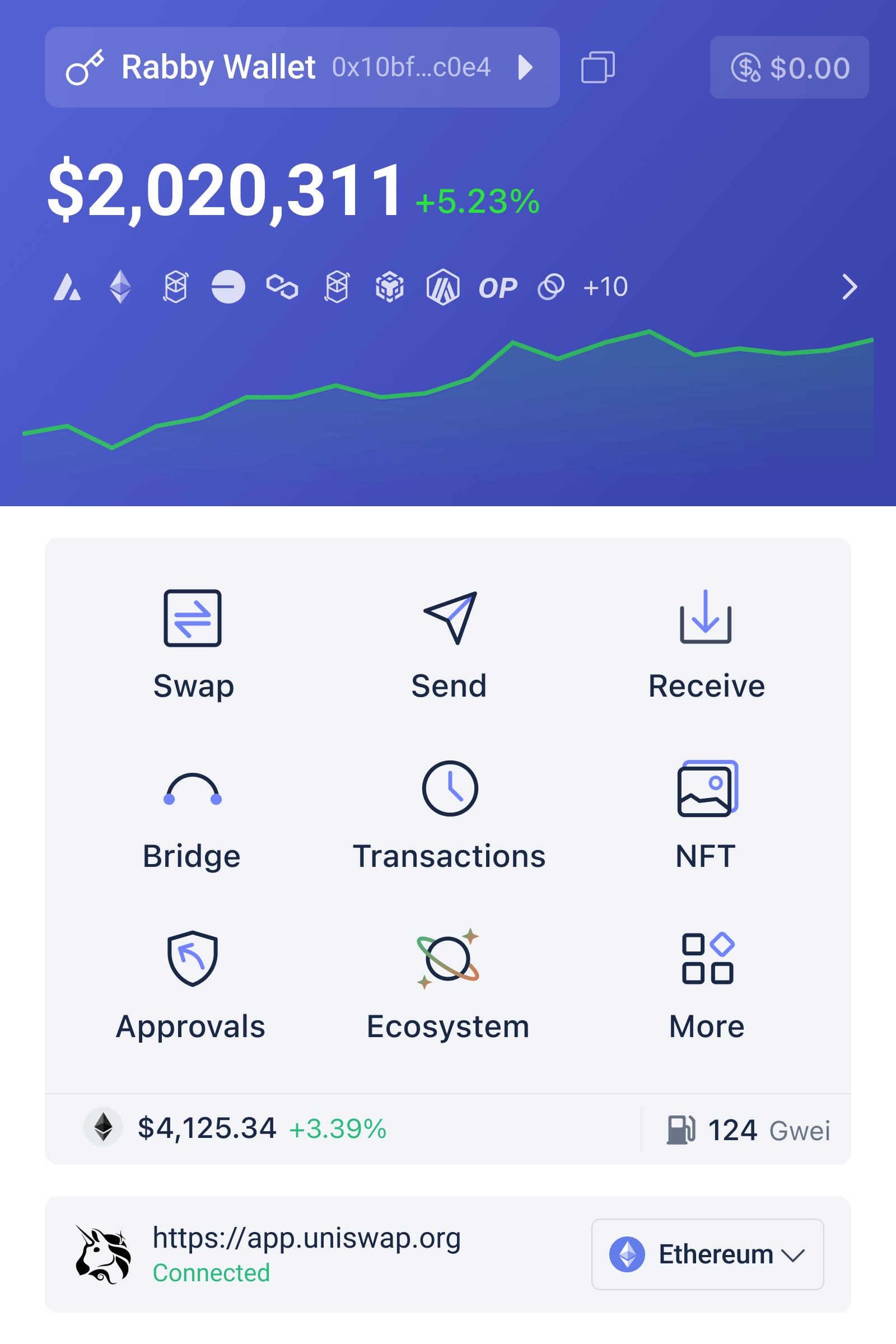
For DeFi users, a wallet such as the rabby wallet extension is most useful when these layers are treated as a review workflow rather than a guarantee. Support for more than 140 EVM-compatible networks and automatic chain switching can make it easier to use multiple applications without repeatedly changing settings. That convenience is meaningful, but it also makes it important to verify the chain, contract, and asset every time a transaction matters.
How Transaction Simulation Improves the Signing Decision
A blockchain transaction is not simply a payment instruction. It may call a smart contract function, pass encoded parameters, alter allowances, transfer several assets, or interact with a protocol that performs additional actions internally. The wallet can simulate the proposed transaction before broadcasting it and present estimated balance changes alongside contract interaction details. In practical terms, this converts opaque calldata into a more human-readable question: what do I expect to lose, receive, or authorize if this succeeds?
Consider a token swap. A weak review process focuses on the displayed output amount. A stronger one checks the network, the token being spent, the contract receiving the call, the expected asset arriving in the wallet, and whether an approval is being requested separately. For a liquidity deposit, the simulation may reveal that one token leaves the wallet while a receipt or position token arrives. If the result instead shows an unexpected transfer of a valuable NFT or a large balance reduction, the user has a reason to stop before signing.
Simulation is especially helpful against blind signing, where a user approves data they cannot interpret. Pre-transaction risk scanning can also flag previously hacked contracts, suspicious interactions, or addresses that do not appear to exist. These warnings are decision support, not courtroom verdicts. A new contract may have little history but still be legitimate; a well-known contract may later be upgraded or compromised. Simulation can show what a call would do under the simulated state, but blockchain state, pricing, liquidity, and contract behavior can change before execution.
That limitation is easy to underestimate. A simulation is a conditional forecast of execution, not a promise. It may not fully capture an oracle update, a sandwich attack, a contract upgrade, a chain reorganization, or behavior triggered only under a different state. It can also be harder to interpret when protocols bundle several operations together. The right response is not to ignore simulation, but to combine it with transaction-size limits, reputable contract addresses, realistic slippage settings, and a deliberate pause when the result is unclear.
Token Approvals Are Persistent Permissions
Many users think an approval is part of a single swap. Usually, it is a permission granted to a token contract or spending contract. The allowance may remain active after the swap, sometimes for a very large amount. If that approved contract is later exploited or its privileged logic is abused, an attacker may be able to transfer tokens from the wallet up to the authorized amount. The wallet owner does not need to sign a new transaction at the moment of theft.
This is why approval management deserves separate attention from transaction simulation. A simulation helps evaluate the permission being requested today. A revoke tool helps inspect and cancel permissions created yesterday, last month, or during a forgotten farming experiment. Revoking an approval generally requires an on-chain transaction and therefore costs gas, and it does not reverse assets already taken. It also does not make every contract interaction safe; it addresses one specific authorization channel.
A practical approval routine is to review permissions after using unfamiliar dApps, before moving a significant balance into a hot wallet, and whenever a protocol has reported an exploit or unusual activity. Users should distinguish between a limited allowance and an unlimited one, where the interface makes that distinction visible. A limited allowance can reduce potential exposure, although it may require more transactions and more gas. Unlimited approvals are more convenient but create a broader failure surface if the spender is compromised.
There is a deeper trade-off here. Security is not simply maximized by revoking everything immediately. Frequent revocations create cost and friction, and users may respond by rushing through more signing prompts later. A better policy is proportional: use a separate wallet for experimentation, keep long-term holdings away from routine dApp activity, use hardware signing for larger balances, and review approvals according to the value and risk of the assets involved. For organizations or serious treasury operations, multiple signers can reduce the consequences of one compromised device, though multisig adds coordination and smart-contract configuration risk of its own.
Multi-Chain Convenience Changes the Risk Profile
Cross-chain use introduces operational hazards that are not solved by stronger contract warnings alone. A wallet may automatically detect the network required by a dApp and switch to it, reducing failed transactions caused by manual network selection. A gas top-up feature can also send native gas across supported chains, helping a user transact where they do not yet hold the network’s gas token. These features remove common points of friction, but the user still needs to confirm that the dApp, chain, and asset are the intended ones.
More networks also mean more custom RPCs, bridge interfaces, token variants, and differences in contract maturity. Manually adding an unsupported EVM chain can be useful, but a custom RPC is an input controlled by the user or a third party; it should not be treated as independent evidence that a chain or application is trustworthy. Automatic switching is similarly a usability feature, not a security judgment. The wallet can help identify where a transaction belongs without proving that the destination protocol deserves permission.
There are also clear platform boundaries. An EVM-focused wallet can be a strong fit for users whose activity centers on Ethereum-compatible ecosystems, but it does not replace a wallet designed for Bitcoin or Solana. The absence of a built-in fiat on-ramp may be inconvenient for U.S. users who want to purchase assets directly, yet separating acquisition from self-custody can also reduce the number of services exposed inside one interface. The relevant question is not whether a wallet has every feature, but whether its scope matches the user’s actual threat model.
A Reusable Pre-Sign Checklist
Before confirming a high-value transaction, read the simulation as an accounting statement. Identify the chain, the contract address, the tokens leaving, the assets expected in return, and any allowance that will remain afterward. Ask whether the action matches the dApp’s stated purpose. If a warning appears, investigate the specific reason rather than dismissing it because the website is familiar. For an unfamiliar protocol, test with a small amount first, and do not assume that a successful small transaction establishes long-term safety.
After the transaction, inspect the resulting balances and review active approvals. If the workflow involves a hardware wallet such as Ledger, Trezor, Keystone, or BitBox02, use the hardware device as an independent confirmation step rather than blindly approving on the computer screen. Keep recovery material offline, verify downloads and browser extensions through official channels, and remember that no simulation can protect a seed phrase typed into a phishing page.
The near-term implication is conditional but important: as DeFi spreads across more EVM networks, the competitive advantage of a wallet may depend less on merely adding chains and more on making cross-chain actions legible. Tools that show balance changes, permissions, and contract context can reduce avoidable mistakes if users understand their limits. The open question is how accurately these interfaces can represent complex, upgradeable protocols without giving users a false sense of certainty.
Frequently Asked Questions
Does transaction simulation guarantee that a DeFi transaction is safe?
No. Simulation estimates the likely result using available contract and chain state before execution. It can reveal unexpected transfers, approvals, and interactions, but it cannot guarantee that prices, liquidity, or external contract conditions will remain unchanged. Treat it as a strong review aid, not a security certification.
Why should I revoke token approvals?
Revocation removes a previously granted spending permission, which can limit the damage if a dApp contract is later exploited or abused. It does not recover funds already lost, and the revocation itself requires an on-chain transaction and gas. Prioritize approvals connected to unfamiliar, unused, or compromised protocols.
Is an audited, open-source wallet risk-free?
No. Open-source code and audits improve transparency and may reduce certain software risks, but they do not eliminate phishing, malware, compromised devices, malicious dApps, or user mistakes. Security is strongest when software review, local key protection, hardware or multisig controls, transaction simulation, and approval hygiene work together.