
What if the most important question before signing a DeFi transaction is not “Is this the right app?” but “What will actually change in my wallet?” That distinction explains why transaction simulation has become central to the appeal of Rabby for users in Germany and across the wider EVM ecosystem. A wallet is no longer merely a key holder or a window into a blockchain. It is also an interpretation layer between opaque smart-contract instructions and a human decision.
Rabby is presented as an open-source, non-custodial wallet for Ethereum and EVM-compatible networks, with a strong emphasis on multi-chain DeFi and security warnings. Its recent Chrome Web Store positioning reinforces that role: the browser extension is designed to make interaction with Ethereum and other EVM networks smoother while helping users identify risks before approval. Yet the useful question is not whether Rabby is “safe” in the abstract. The better question is which risks its design can reduce, which risks remain outside its control, and how a user should interpret the information shown before signing.
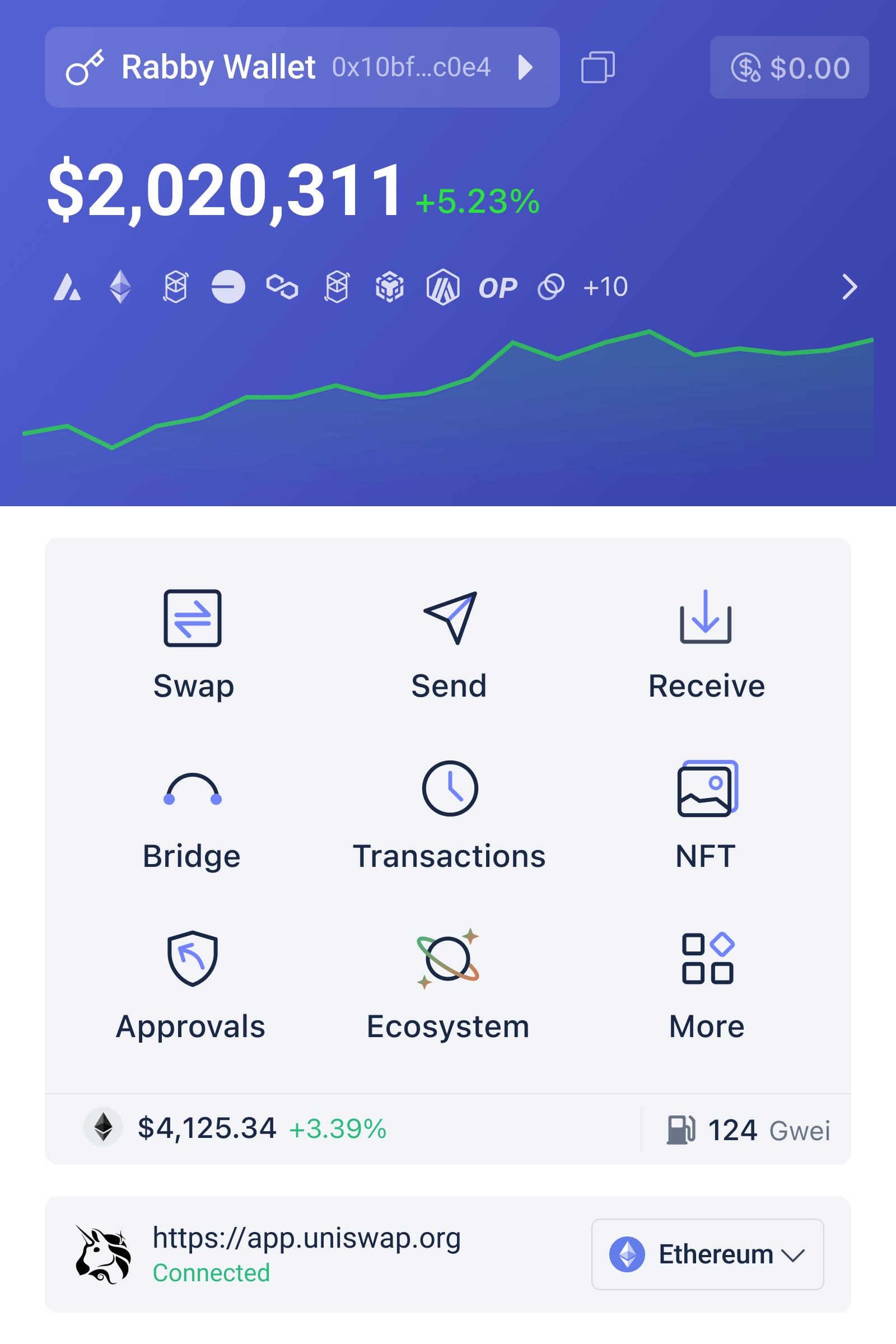
Transaction simulation is an interpretation layer, not a guarantee
In a normal Ethereum-style transaction, a user may see a contract address, a method name, an amount, and a request to sign. The underlying call can involve several contracts, token approvals, swaps, or collateral movements. The blockchain executes code deterministically, but the human interface often compresses that complexity into a button labelled “Confirm”. This is where Rabby’s transaction simulation becomes meaningful.
Before signing, Rabby performs a preliminary simulation intended to show the expected changes to token balances. In practical terms, the wallet asks an execution environment to process the proposed call without broadcasting it as a final signed transaction. The resulting state difference can then be translated into a human-readable view: which assets are expected to leave, which assets may arrive, and whether an approval or other state change is involved.
This corrects a common misconception. Simulation does not independently prove that a protocol is trustworthy, nor does it eliminate the need to read the transaction context. It is closer to a conditional preview: if the call is executed against the relevant current state and the expected conditions hold, these are the likely effects. That is powerful because it exposes the economic consequence of an instruction, but it remains dependent on the simulated environment, available data, and the behaviour of the contracts involved.
The distinction matters especially in fast-moving DeFi markets. A quote can change, liquidity can move, a block can be reordered, or a contract can react differently when the transaction is actually included. A simulation that shows a plausible result is therefore evidence about an intended execution path, not an unconditional promise. Users should treat unexpected output as a reason to stop, investigate, or reduce exposure—not as a minor interface inconvenience.
Why the feature is particularly useful in multi-chain DeFi
Multi-chain activity increases the number of ways a transaction can be misunderstood. Rabby supports more than 140 EVM-compatible networks, including Ethereum, Polygon, Arbitrum, Optimism, Avalanche, Base, and BNB Chain. The ability to connect a dApp and automatically switch to the required network removes a familiar source of friction, but convenience creates its own risk: a user may become less conscious of which chain currently holds the asset and which chain will receive the result.
Simulation helps by shifting attention from network labels alone to the expected state transition. If a user initiates a swap, the relevant question is not simply whether the wallet is connected to the correct chain. It is whether the displayed result matches the intended asset, amount, recipient, and slippage conditions. For a bridge transaction, the user should additionally consider the source and destination networks, the intermediary route, and whether the received asset is the canonical or a bridged representation.
Rabby’s integrated bridge access, including routes through protocols such as LI.FI, illustrates the complexity. A single user action may involve several contracts and a cross-chain delivery process rather than one atomic movement visible on a single ledger. A preview can improve comprehension at the source, but it cannot make cross-chain settlement atomic in the same way as a simple transfer. Delays, failed delivery, route changes, and differences between representations of an asset remain relevant.
The same principle applies to the integrated swap aggregator, which can scan decentralised exchanges such as Uniswap and 1inch for routes intended to improve pricing and reduce slippage. Aggregation may broaden the available execution paths, but “best price” is not identical to “best outcome”. Gas costs, liquidity depth, price impact, approval requirements, route complexity, and execution risk all matter. A sophisticated user should compare the net result and permissions, not only the quoted exchange rate.
Security warnings reduce cognitive load, but they do not replace judgment
Rabby’s security engine is designed to inspect contracts and addresses for signals associated with phishing, known exploits, and potentially dangerous unlimited token approvals. This is valuable because many wallet losses occur not through a failure of cryptography, but through a user authorising a transaction whose economic meaning was misunderstood.
Still, a warning system is not a universal oracle. A new contract may have no established risk history. A legitimate protocol may trigger a broad warning because its design is complex. Conversely, the absence of a warning cannot establish that a contract is safe, solvent, fairly governed, or economically sensible. Detection systems generally work best when they identify known patterns and suspicious indicators; they are less reliable against novel attacks, compromised front ends, malicious governance decisions, or contracts that behave correctly during review and differently later.
This is why the strongest mental model is not “Rabby checks everything for me”. It is “Rabby gives me an additional inspection surface before I authorise an action”. That surface is most useful when combined with independent verification of the dApp domain, the contract address, the intended chain, and the required approval amount. For larger positions, hardware-wallet support for Ledger, Trezor, and OneKey can add a separate signing boundary, although a hardware device cannot make a malicious transaction economically safe if the user approves it.
The non-custodial model also deserves precise interpretation. Private keys are stored locally on the user’s device rather than sent to Rabby’s servers, and the wallet does not itself rewrite or create the user’s intended transactions. Core signing functions can remain available even if Rabby’s backend services are unavailable. That improves control and resilience, but it transfers responsibility to the user: seed-phrase security, device hygiene, browser integrity, phishing resistance, and backup procedures remain decisive.
Stablecoin gas and convenience: useful abstraction, real dependencies
Rabby’s Gas Account feature addresses a practical problem familiar to multi-chain users: holding the correct native token for every network solely to pay transaction fees. Paying gas with stablecoins such as USDC can reduce operational friction and make it easier to move between chains. For users managing several networks from Germany, this can be more convenient than maintaining small native-token balances everywhere.
However, fee abstraction changes the user experience rather than abolishing the underlying fee market. Someone still pays validators or sequencers in the network’s native asset, and the conversion or sponsorship mechanism introduces dependencies on supporting infrastructure, liquidity, pricing, and service availability. A stablecoin balance may therefore make a transaction easier to initiate, but it does not guarantee execution during congestion or protect the user from network-specific failures.
The same caution applies to Rabby Points, which can be earned through actions such as swaps, gas top-ups, or referrals. A points programme may encourage exploration of wallet features, but points should not be confused with a guaranteed financial return or an established monetary asset. Users should evaluate a transaction by its fees, permissions, and economic purpose—not by the possibility of collecting loyalty rewards.
How to use a Rabby Chrome extension responsibly
For readers considering a rabby wallet extension, the installation decision should be only the first step in a repeatable operating discipline. Downloading from an official distribution channel, checking the extension identity, and avoiding unsolicited installation links are basic controls. The browser itself is part of the security perimeter, so extensions, operating-system updates, and password practices deserve attention.
Before signing, pause when the simulation differs from the economic intention. A swap should not unexpectedly remove a second token. A simple transfer should not request an unlimited approval. A bridge should not lead to an unfamiliar destination asset without a clear explanation. If the preview is incomplete, unavailable, or inconsistent with the dApp interface, postponing the transaction is rational. DeFi rewards speed, but irreversible errors are often created in the few seconds saved by clicking through a warning.
A reusable decision framework is to check four layers: identity, intent, effect, and authority. Identity asks whether the dApp, chain, and contract are the ones intended. Intent asks whether the requested method matches the action described by the interface. Effect asks what the simulation predicts will leave, arrive, or change. Authority asks whether the approval or permission is narrowly scoped and still necessary. This framework remains useful even when using a different wallet, because it focuses on transaction semantics rather than brand familiarity.
What to watch as wallet design evolves
The direction is clear even if the endpoint is not. Wallets are moving from passive signature prompts toward active transaction interpretation. Open-source code under the MIT licence allows community inspection, while multi-chain routing, simulations, warnings, and fee abstraction attempt to reduce the practical burden of DeFi. If these systems become more accurate and more transparent, users may spend less time decoding raw contract calls and more time evaluating risk, incentives, and portfolio exposure.
The unresolved issue is whether greater convenience will produce better decisions or simply faster approvals. Automatic network switching, aggregated routes, and stablecoin gas can remove needless friction, but friction sometimes acts as a useful pause. The most promising design is therefore not one that hides complexity completely. It is one that exposes the important complexity at the moment when the user can still change course.
Frequently asked questions
Does Rabby transaction simulation guarantee that a DeFi transaction is safe?
No. Simulation shows expected state changes under the conditions available when the preview is produced. It can reveal unexpected transfers, approvals, or balance changes, but it cannot guarantee contract integrity, future execution conditions, or the absence of novel vulnerabilities.
Is Rabby suitable for users who operate across several EVM chains?
It is designed for that use case, with broad EVM support, automatic network switching, integrated swaps and bridges, and hardware-wallet compatibility. The convenience is most valuable when paired with careful checks of chain identity, asset representation, fees, approvals, and simulated outcomes.
What remains the user’s responsibility when using a non-custodial wallet?
The user remains responsible for protecting recovery credentials, securing the device and browser, verifying dApp addresses, interpreting transaction previews, and deciding which contracts to authorise. Non-custodial control limits dependence on an intermediary; it does not remove operational risk.