Claude for Windows and macOS: What the Desktop App Really Changes

A common misconception is that installing Claude on a computer turns it into an autonomous digital employee. It does not. The Claude desktop app is better understood as a more convenient control point for a conversational AI assistant: a place where files, technical work, writing, and ongoing projects can be handled with less friction than in a browser tab. That distinction matters. The app’s value is not simply that it exists on Windows or macOS, but that it can fit into the way people already work—especially when the task involves repeated context, documents, code, or several stages of reasoning.

Claude is Anthropic’s assistant for writing, analysis, coding, research, learning, and everyday productivity. On a US desktop, its usefulness depends on a chain of conditions: the quality of the prompt, the information supplied, the account and plan, available features, and the user’s willingness to verify important results. The desktop installation can improve access and continuity, but it does not remove the underlying limits of generative AI. A polished answer may still be incomplete, mistaken, or based on an interpretation that needs checking.

Claude application identity for an AI assistant used in desktop writing, analysis, and coding workflows

Myth: the desktop app is only a browser shortcut

There is some truth behind this assumption: both a browser and a desktop application provide access to a conversational interface. Yet the practical difference is workflow friction. A dedicated app is easier to keep available beside a code editor, document, spreadsheet, or research window. That changes the cost of asking a question, supplying context, and returning to an earlier conversation. Small reductions in friction can matter because productive AI use is often iterative rather than one-shot.

For example, a user debugging a program may first ask Claude to explain an unfamiliar function, then provide an error message, then request an implementation plan, and finally ask for a review of a proposed change. The assistant is not merely generating code; it is helping organize a sequence of reasoning tasks. The same pattern applies to a long report: summarize it, identify assumptions, compare two sections, draft questions for a meeting, and revise a passage for a specific audience.

Users looking for the official installation route should start with the claude app download flow and confirm that the installer matches their operating system. Avoiding unofficial repackaged installers is not a minor precaution. Desktop software can receive sensitive files and account access, so provenance is part of the security model.

Myth: Claude is mainly a writing generator

Writing is one visible use, but the more useful mental model is “contextual reasoning assistant.” Claude can work with user-provided files and instructions, allowing people to ask questions about material rather than manually moving every detail into separate tools. That may include summarizing a policy document, extracting action items from meeting notes, comparing drafts, or turning technical material into an explanation for a non-specialist.

The important mechanism is context selection. An AI assistant does not automatically know which facts matter to a particular decision. The user still has to provide relevant material, define the task, and identify constraints. If a contract summary must distinguish obligations from suggestions, that requirement should be stated. If code must preserve compatibility with an existing system, the surrounding assumptions should be included. Better context usually improves usefulness, but more context is not automatically better: irrelevant or contradictory material can make the task harder to interpret.

This is why Claude may be particularly useful for knowledge work that sits between reading and producing. It can help a person move from a large information set to a working outline, a set of questions, or a draft that can then be checked. It should not be treated as the final authority on legal, financial, medical, security, or operational decisions.

Myth: coding assistance means handing over software development

Claude can explain code, help investigate bugs, propose implementation plans, and review technical material. Those are meaningful capabilities, but they are not equivalent to reliable software ownership. Generated code can misunderstand requirements, omit edge cases, introduce security weaknesses, or appear plausible while failing under real inputs.

A safer workflow separates assistance from validation. Ask for an explanation before requesting a change. Describe the expected behavior and constraints. Request a plan that identifies files, dependencies, and tests. Then inspect the proposed implementation, run it in an appropriate environment, and test failure cases. This sequence is slower than accepting a pasted answer, but it creates useful checkpoints. The non-obvious advantage is that Claude can serve as a reviewer of reasoning, not just a producer of code.

For learners, that distinction is especially important. Asking “why does this fail?” can build understanding; asking only for a replacement may conceal the underlying concept. For experienced developers, the assistant can reduce time spent on routine explanation or documentation, while the human retains responsibility for architecture, security, and release decisions.

Desktop continuity, accounts, and privacy boundaries

Claude conversations, projects, memory, and preferences are designed to sync across signed-in desktop, web, and mobile experiences. Continuity can be valuable when a user begins research on a Windows computer, continues on a Mac, or checks a conversation from a mobile device. It also means that account management deserves attention. The availability of features depends on the user’s account, plan, region, and—where applicable—organization settings.

Synchronization should not be confused with unlimited or consequence-free memory. Users need to understand what information they are submitting and whether it belongs in an AI service at all. Company policies may restrict confidential customer data, source code, personal records, or regulated information. In an enterprise setting, deployment and access can be managed through business or enterprise administration paths when available, but administrative controls do not eliminate the need for careful data classification.

A practical rule is to treat every upload as a deliberate disclosure. Remove unnecessary personal information, avoid sharing secrets such as credentials or private keys, and review generated summaries against the original file. The right question is not “Is Claude private?” in the abstract. It is “What information am I providing, under which account and controls, for which purpose?”

A recent shift: from conversation to browser-mediated tasks

Recent product news points to a notable direction: Claude in Chrome is described as a connector that can be enabled in a conversation, allowing Claude to navigate, click, and fill forms in a browser from the desktop app. The practical implication is a move from discussing a task to assisting with actions inside another interface. That could reduce window switching for repetitive browser work, such as moving through a sequence of pages or entering information.

But action capability raises the standard for supervision. A mistaken summary is inconvenient; a mistaken click can change a record, submit a form, or send information to the wrong destination. The useful boundary is task reversibility. Low-risk, repeatable actions may be suitable for closer automation, while irreversible or sensitive actions should retain human review before completion. Users should also watch how permissions, confirmations, and account controls are implemented in practice rather than assuming that a connector is safe simply because it is convenient.

A decision framework for Windows and macOS users

Choose the desktop app when your work benefits from persistent access, repeated conversations, file-based analysis, coding support, or movement between Claude and other desktop tools. A browser may be sufficient when you use the assistant occasionally, work on a shared computer, or prefer not to install software. Neither choice guarantees better answers. The difference is primarily about workflow design, continuity, and the kinds of context you can provide efficiently.

Before relying on Claude for an important task, use four checks: identify the decision you are trying to improve; supply the relevant source material; ask the assistant to state assumptions or uncertainties; and verify the output against an authoritative source or real test. This framework works across writing, research, coding, and office productivity. It also prevents a frequent error: evaluating an AI tool by the fluency of its prose instead of by whether its output survives inspection.

Frequently asked questions

Is Claude available for both Windows and macOS?

Claude offers a desktop download flow for both Windows and macOS, with platform-specific installers. Use an official download path or trusted app store, and check that the installer corresponds to your operating system.

Can Claude replace a coding editor or professional software?

No. Claude can support explanation, debugging, planning, and review, but it does not replace a development environment, testing process, version control, or professional judgment. Generated code should be inspected and tested before use.

Will conversations and preferences follow me between devices?

Conversations, projects, memory, and preferences are designed to sync across signed-in desktop, web, and mobile experiences. The actual features available can vary by account, plan, region, and organization settings.

What is the most important limitation to remember?

Claude can produce a confident answer without having complete or correct information. Treat it as a tool for accelerating thought and handling context, not as an automatic source of truth. The more consequential the task, the more important independent verification becomes.

The strongest case for Claude on Windows or macOS is therefore not that it makes work automatic. It is that a readily available assistant can shorten the distance between a question, the relevant context, and a workable next step. Used with clear boundaries, the desktop app can improve the mechanics of thinking and producing. Used without verification, it can merely make errors faster to create.

Cake Wallet for Monero: How to Download, Install, and Choose It Wisely

A user in Madrid, Mexico City, or Miami may begin with a simple task: install a wallet for Monero, restore funds, and make a first payment without exposing more information than necessary. The practical difficulty is that “a wallet” is not merely an app with a balance screen. It is a system for generating keys, communicating with a network, managing backups, and displaying privacy-sensitive transaction data. Cake Wallet is attractive because it combines a mobile-focused interface with support for Monero and other assets. Yet the right comparison is not “good wallet versus bad wallet.” It is convenience versus control, privacy goals versus operational habits, and a general-purpose app versus a narrowly optimized tool.

That distinction matters for Spanish-speaking users searching for “cake wallet XMR,” “instalar Cake Wallet,” or the official Cake Wallet app. A wallet can use strong underlying cryptography and still be used unsafely if the recovery phrase is exposed, the device is compromised, or the user misunderstands what transaction privacy does and does not conceal.

Cake Wallet logo representing a mobile wallet interface for managing Monero and other digital assets

What Cake Wallet is actually solving

In technical terms, a cryptocurrency wallet does not store coins in the same way a physical wallet stores cash. The assets remain recorded on a blockchain or distributed ledger; the wallet manages the private keys and derives the addresses needed to receive, authorize, and recover funds. Cake Wallet packages those functions into a mobile application intended to make self-custody more approachable.

For Monero, the distinction is especially important. Monero transactions use privacy mechanisms that conceal transaction amounts and make the relationship between sender, recipient, and payment history more difficult to infer from public ledger data. A wallet must therefore do more than show a token balance. It must interact correctly with Monero’s address and transaction model, synchronize relevant information, and present the user with enough context to avoid sending funds to the wrong destination.

This is why downloading the application from a trustworthy source is part of the security model, not an administrative detail. Readers who need guidance locating the relevant app should verify the source carefully before choosing descargar cake wallet. The link itself should not replace independent verification of the application, publisher, permissions, and recovery process.

Cake Wallet compared with a Monero-focused wallet

The first useful comparison is between a multi-asset wallet such as Cake Wallet and a wallet designed primarily around Monero. A dedicated Monero wallet may offer a more concentrated user experience, with fewer unrelated assets and settings. That can reduce cognitive load for someone whose main purpose is holding and spending XMR. It may also make specialist functions easier to locate.

Cake Wallet’s broader approach can be more practical for users who manage several assets or want one mobile interface rather than separate applications. This is particularly relevant in LATAM and among US-based Spanish-speaking users who may move between stablecoins, Bitcoin, Monero, and local payment arrangements. The trade-off is conceptual: one application supporting multiple assets can be convenient, but the user must understand that each asset has different network rules, fees, confirmation behavior, and privacy properties.

A multi-asset wallet should therefore not be judged only by the number of supported currencies. The more useful questions are whether the app supports the functions the user actually needs, whether the recovery process is understandable, how much control the user has over network connections, and whether the interface makes risky actions difficult. Feature breadth is not the same as security depth.

Mobile convenience versus stronger operational isolation

The second comparison is between a mobile software wallet and a more isolated setup, such as a dedicated device or an offline signing workflow. A phone is convenient because it is usually available when a payment is needed. It can also be easier for newcomers to back up and use than a more technical arrangement. For modest spending balances, that convenience may be reasonable.

However, a phone is a general-purpose computer. It may run many applications, connect to uncertain networks, receive deceptive messages, and be exposed to screen capture, malware, loss, or unauthorized access. Encryption within the wallet cannot compensate for a compromised operating system or a recovery phrase photographed and stored in an online gallery.

This creates a practical boundary condition. Cake Wallet may be suitable for everyday liquidity, learning, and moderate balances, while a user holding a larger long-term reserve may prefer to separate spending funds from savings and use a stronger custody arrangement for the latter. The correct division depends on the user’s technical ability, threat model, and willingness to trade convenience for additional procedures.

Myths about Monero and wallet privacy

Myth: a privacy wallet makes the user anonymous in every situation

Reality is narrower. Monero’s protocol-level privacy is designed to reduce the information publicly revealed by transactions, but it does not erase every surrounding signal. Exchanges may retain identity records, a user may reveal an address to a counterparty, a phone may leak behavioral information, and a merchant may associate a payment with an account. Privacy is better understood as a reduction in unnecessary disclosure, not an absolute cloak.

Myth: the wallet app is the main secret

Reality: the recovery phrase and private keys are the critical secrets. If someone obtains them, they may control the funds even if the original phone remains locked. Conversely, if the phrase is lost, support staff generally cannot reconstruct access in a self-custodial system. This is the central trade-off of self-custody: the user gains authority but assumes responsibility.

Myth: a successful installation means the wallet is ready for serious funds

Reality: installation is only the beginning. A careful user should create or restore the wallet in a controlled environment, record the recovery information offline, verify that the backup can be read, enable appropriate device protection, and conduct a small test transaction before moving a larger amount. A test payment checks more than the address; it also confirms that synchronization, network selection, and the user’s operational understanding are working.

How to install Cake Wallet with a risk-aware workflow

For users searching how to install Cake Wallet, the safest workflow is sequential rather than hurried. First, confirm that the application comes from a source associated with the legitimate project and that the device’s operating system is current. Avoid installation files received through unsolicited messages or advertisements, especially when they request unusual permissions or direct the user to enter an existing recovery phrase.

Next, decide whether to create a new wallet or restore an existing one. During creation, write the recovery phrase on a durable offline medium and keep it private. Do not paste it into a website, cloud note, email, translation tool, or support chat. A support representative who asks for the phrase is not helping with recovery; they are requesting the means to control the wallet.

After setup, inspect the receiving address and consider sending a small amount first. Monero synchronization can require patience, and the displayed balance may depend on the wallet’s progress in scanning relevant blockchain data. Users should distinguish between a network delay, an incomplete synchronization process, and a genuine transaction problem rather than repeatedly reinstalling the app or revealing their recovery phrase.

For payments, verify the destination through an independent channel when the amount matters. Screens can be manipulated, clipboard contents can be replaced by malware, and a familiar contact can use a compromised account. The wallet reduces some risks; it does not remove the need for transaction verification.

A decision framework for users in Spain, the United States, and Latin America

Cake Wallet is a plausible fit when the user wants mobile self-custody, Monero support, and access to more than one asset in a single interface. It is less obviously ideal when the user needs institutional custody, advanced cold-storage procedures, or a wallet narrowly focused on one technical workflow. Someone in Spain may also need to consider local reporting and tax obligations; privacy at the transaction layer does not eliminate legal responsibilities. In the United States and LATAM, exchange access, banking relationships, and local compliance practices may differ, but the underlying custody lesson remains the same.

A reusable rule is to separate three questions: what must be private, what must be available immediately, and what loss could be tolerated. Funds needed for frequent spending prioritize availability. Funds intended for long-term storage prioritize recovery resilience and isolation. Information that could identify the user’s financial activity requires attention not only to the wallet, but also to exchanges, merchants, devices, and communication channels.

There is no recent project-specific news available for the current eligible week, so claims about new features or imminent changes should be treated cautiously. The useful near-term signals to monitor are concrete: changes in supported operating systems, wallet backup guidance, network connection options, security disclosures, and documented updates affecting Monero synchronization or transaction handling. Those signals are more decision-relevant than promotional claims about being “the safest” or “the most private” wallet.

Frequently asked questions

Is Cake Wallet suitable for Monero?

It can be suitable for users who want a mobile self-custody wallet with Monero support and a broader asset interface. Suitability depends on the user’s threat model, backup discipline, device security, and need for advanced custody features.

Does Cake Wallet make every transaction completely anonymous?

No. Monero is designed to provide strong transaction privacy at the protocol level, but exchanges, merchants, devices, communication habits, and identity records can still reveal information. The wallet should be viewed as one component of a wider privacy practice.

What is the most important step after installing the app?

Secure the recovery phrase offline and verify that it can be used for recovery before transferring significant funds. Never share it with a website, application, or support contact.

The most accurate mental model is simple: Cake Wallet can make self-custody more accessible, but accessibility does not remove responsibility. Its value lies in how well its interface, Monero support, and multi-asset convenience match the user’s real needs. The decisive security feature is still not the logo or the download button. It is the quality of the user’s recovery process, device hygiene, transaction verification, and understanding of where wallet privacy ends.

Wallet Security Audit, Transaction Simulation, and Token Approval Management in DeFi

You are moving funds on an unfamiliar Layer 2 from a U.S. wallet, and the transaction appears ordinary: approve a token, then deposit it into a yield protocol. The danger is not always an obviously malicious pop-up. It may be an unlimited approval granted weeks earlier, a contract that behaves differently than its website suggests, or a transaction signed on the wrong network. In DeFi, wallet security is therefore less about finding a single “safe” button and more about inspecting the full path from intention to execution.

That distinction matters for users managing assets across Ethereum, BNB Chain, Arbitrum, Optimism, Polygon, Avalanche, and other EVM-compatible networks. A multi-chain wallet can reduce operational friction, but convenience can also hide complexity. Security features such as pre-transaction scanning, transaction simulation, and approval revocation are valuable because they expose parts of that complexity before funds move. They do not eliminate smart-contract risk, phishing, or user error. Their real contribution is narrower and more practical: they improve the quality of the decision made before signing.

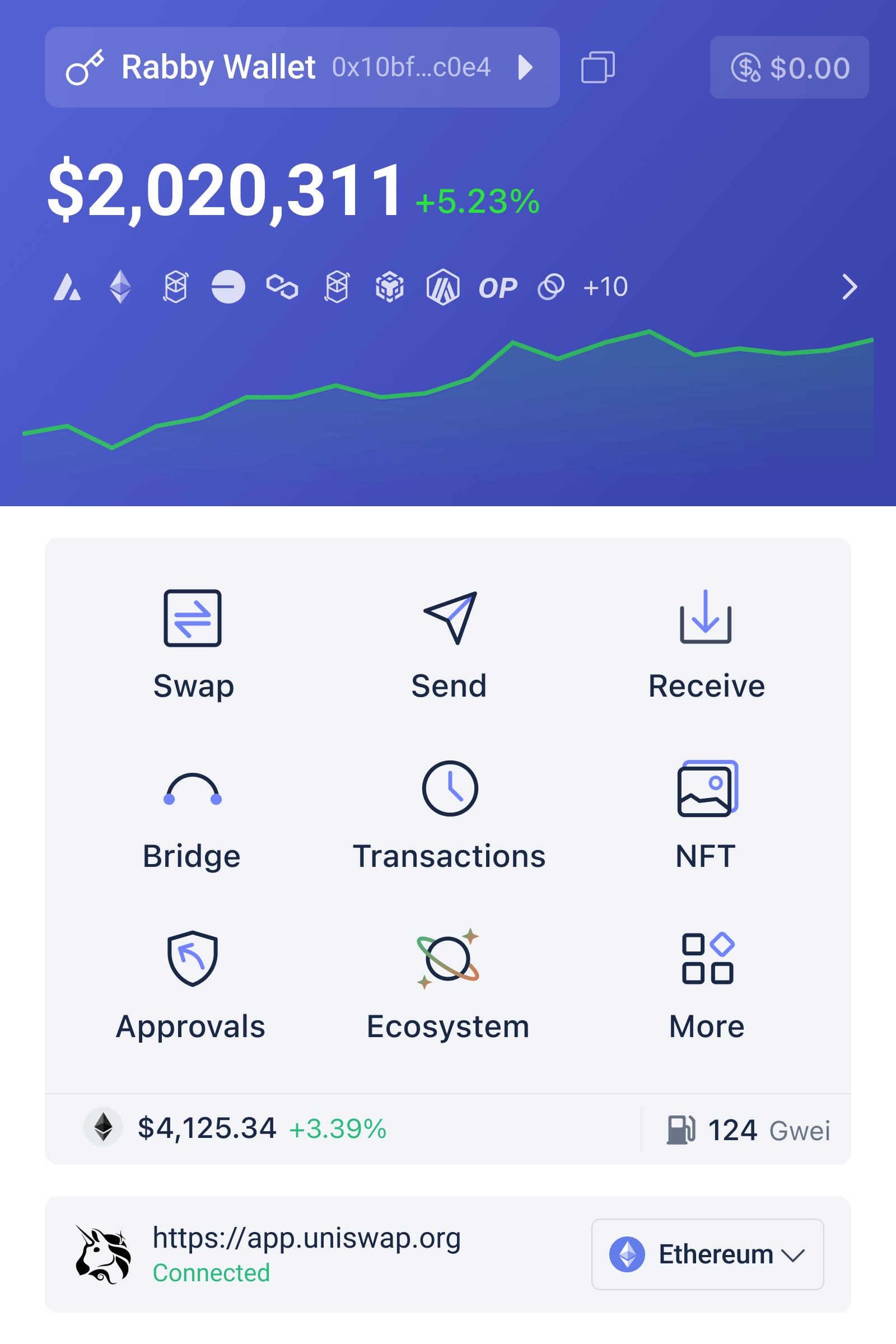
Wallet interface illustrating transaction review and multi-chain security controls

What a Wallet Security Audit Can—and Cannot—Tell You

A security audit is often treated as a certificate of safety. It is better understood as a structured examination of code, architecture, and known attack paths at a particular point in time. An audit may identify reentrancy risks, flawed access controls, accounting mistakes, or unsafe assumptions. It does not prove that every future contract interaction is safe, nor does it certify the honesty of a project’s team, front end, or governance process.

The same principle applies to wallet software. Open-source architecture allows researchers and community members to inspect the code, while independent audits can identify classes of implementation risk. Local private-key storage is another important boundary: when keys are encrypted and kept on the user’s device rather than transmitted to a backend, a server compromise is less likely to expose those keys directly. But local storage does not protect a user who reveals a seed phrase, installs malware, approves a hostile contract, or signs a deceptive message.

This is the first useful mental model: security controls operate at different layers. Key custody protects the signing secret. Hardware wallets can make remote extraction harder and add a separate confirmation surface. Multi-signature arrangements, including integrations with Gnosis Safe, reduce dependence on one signer. Transaction scanning and simulation examine what a proposed action appears likely to do. Approval management limits what previously authorized contracts may spend. No layer substitutes for the others.

For DeFi users, a wallet such as the rabby wallet extension is most useful when these layers are treated as a review workflow rather than a guarantee. Support for more than 140 EVM-compatible networks and automatic chain switching can make it easier to use multiple applications without repeatedly changing settings. That convenience is meaningful, but it also makes it important to verify the chain, contract, and asset every time a transaction matters.

How Transaction Simulation Improves the Signing Decision

A blockchain transaction is not simply a payment instruction. It may call a smart contract function, pass encoded parameters, alter allowances, transfer several assets, or interact with a protocol that performs additional actions internally. The wallet can simulate the proposed transaction before broadcasting it and present estimated balance changes alongside contract interaction details. In practical terms, this converts opaque calldata into a more human-readable question: what do I expect to lose, receive, or authorize if this succeeds?

Consider a token swap. A weak review process focuses on the displayed output amount. A stronger one checks the network, the token being spent, the contract receiving the call, the expected asset arriving in the wallet, and whether an approval is being requested separately. For a liquidity deposit, the simulation may reveal that one token leaves the wallet while a receipt or position token arrives. If the result instead shows an unexpected transfer of a valuable NFT or a large balance reduction, the user has a reason to stop before signing.

Simulation is especially helpful against blind signing, where a user approves data they cannot interpret. Pre-transaction risk scanning can also flag previously hacked contracts, suspicious interactions, or addresses that do not appear to exist. These warnings are decision support, not courtroom verdicts. A new contract may have little history but still be legitimate; a well-known contract may later be upgraded or compromised. Simulation can show what a call would do under the simulated state, but blockchain state, pricing, liquidity, and contract behavior can change before execution.

That limitation is easy to underestimate. A simulation is a conditional forecast of execution, not a promise. It may not fully capture an oracle update, a sandwich attack, a contract upgrade, a chain reorganization, or behavior triggered only under a different state. It can also be harder to interpret when protocols bundle several operations together. The right response is not to ignore simulation, but to combine it with transaction-size limits, reputable contract addresses, realistic slippage settings, and a deliberate pause when the result is unclear.

Token Approvals Are Persistent Permissions

Many users think an approval is part of a single swap. Usually, it is a permission granted to a token contract or spending contract. The allowance may remain active after the swap, sometimes for a very large amount. If that approved contract is later exploited or its privileged logic is abused, an attacker may be able to transfer tokens from the wallet up to the authorized amount. The wallet owner does not need to sign a new transaction at the moment of theft.

This is why approval management deserves separate attention from transaction simulation. A simulation helps evaluate the permission being requested today. A revoke tool helps inspect and cancel permissions created yesterday, last month, or during a forgotten farming experiment. Revoking an approval generally requires an on-chain transaction and therefore costs gas, and it does not reverse assets already taken. It also does not make every contract interaction safe; it addresses one specific authorization channel.

A practical approval routine is to review permissions after using unfamiliar dApps, before moving a significant balance into a hot wallet, and whenever a protocol has reported an exploit or unusual activity. Users should distinguish between a limited allowance and an unlimited one, where the interface makes that distinction visible. A limited allowance can reduce potential exposure, although it may require more transactions and more gas. Unlimited approvals are more convenient but create a broader failure surface if the spender is compromised.

There is a deeper trade-off here. Security is not simply maximized by revoking everything immediately. Frequent revocations create cost and friction, and users may respond by rushing through more signing prompts later. A better policy is proportional: use a separate wallet for experimentation, keep long-term holdings away from routine dApp activity, use hardware signing for larger balances, and review approvals according to the value and risk of the assets involved. For organizations or serious treasury operations, multiple signers can reduce the consequences of one compromised device, though multisig adds coordination and smart-contract configuration risk of its own.

Multi-Chain Convenience Changes the Risk Profile

Cross-chain use introduces operational hazards that are not solved by stronger contract warnings alone. A wallet may automatically detect the network required by a dApp and switch to it, reducing failed transactions caused by manual network selection. A gas top-up feature can also send native gas across supported chains, helping a user transact where they do not yet hold the network’s gas token. These features remove common points of friction, but the user still needs to confirm that the dApp, chain, and asset are the intended ones.

More networks also mean more custom RPCs, bridge interfaces, token variants, and differences in contract maturity. Manually adding an unsupported EVM chain can be useful, but a custom RPC is an input controlled by the user or a third party; it should not be treated as independent evidence that a chain or application is trustworthy. Automatic switching is similarly a usability feature, not a security judgment. The wallet can help identify where a transaction belongs without proving that the destination protocol deserves permission.

There are also clear platform boundaries. An EVM-focused wallet can be a strong fit for users whose activity centers on Ethereum-compatible ecosystems, but it does not replace a wallet designed for Bitcoin or Solana. The absence of a built-in fiat on-ramp may be inconvenient for U.S. users who want to purchase assets directly, yet separating acquisition from self-custody can also reduce the number of services exposed inside one interface. The relevant question is not whether a wallet has every feature, but whether its scope matches the user’s actual threat model.

A Reusable Pre-Sign Checklist

Before confirming a high-value transaction, read the simulation as an accounting statement. Identify the chain, the contract address, the tokens leaving, the assets expected in return, and any allowance that will remain afterward. Ask whether the action matches the dApp’s stated purpose. If a warning appears, investigate the specific reason rather than dismissing it because the website is familiar. For an unfamiliar protocol, test with a small amount first, and do not assume that a successful small transaction establishes long-term safety.

After the transaction, inspect the resulting balances and review active approvals. If the workflow involves a hardware wallet such as Ledger, Trezor, Keystone, or BitBox02, use the hardware device as an independent confirmation step rather than blindly approving on the computer screen. Keep recovery material offline, verify downloads and browser extensions through official channels, and remember that no simulation can protect a seed phrase typed into a phishing page.

The near-term implication is conditional but important: as DeFi spreads across more EVM networks, the competitive advantage of a wallet may depend less on merely adding chains and more on making cross-chain actions legible. Tools that show balance changes, permissions, and contract context can reduce avoidable mistakes if users understand their limits. The open question is how accurately these interfaces can represent complex, upgradeable protocols without giving users a false sense of certainty.

Frequently Asked Questions

Does transaction simulation guarantee that a DeFi transaction is safe?

No. Simulation estimates the likely result using available contract and chain state before execution. It can reveal unexpected transfers, approvals, and interactions, but it cannot guarantee that prices, liquidity, or external contract conditions will remain unchanged. Treat it as a strong review aid, not a security certification.

Why should I revoke token approvals?

Revocation removes a previously granted spending permission, which can limit the damage if a dApp contract is later exploited or abused. It does not recover funds already lost, and the revocation itself requires an on-chain transaction and gas. Prioritize approvals connected to unfamiliar, unused, or compromised protocols.

Is an audited, open-source wallet risk-free?

No. Open-source code and audits improve transparency and may reduce certain software risks, but they do not eliminate phishing, malware, compromised devices, malicious dApps, or user mistakes. Security is strongest when software review, local key protection, hardware or multisig controls, transaction simulation, and approval hygiene work together.

Ledger Wallet Batch Operations Efficiency: Consolidating 50+ Addresses Into One in Minimal Transactions

A cryptocurrency holder managing 50 or more receiving addresses across years of transactions faces a practical problem: consolidating those scattered funds into a single address can cost hundreds or thousands of dollars in network fees if handled naively. Each address contains discrete unspent outputs (UTXOs), and moving them individually means paying transaction fees 50 times over. The same problem appears when managing legacy addresses, consolidating inherited wallets, or merging funds from multiple income sources into a controlled position. For Bitcoin specifically, the math is unforgiving. A single transaction moving one UTXO at current network conditions may cost $5 to $50; fifty separate transactions cost proportionally more.

Batch consolidation solves this by combining multiple inputs into one or a small number of transactions. The security model of self-custody means the user retains complete control through their hardware wallet and recovery phrase, but that responsibility includes understanding how to move funds efficiently. A Ledger hardware wallet keeps private keys isolated from the computer or application, yet the software interface must still construct transactions intelligently to avoid wasting value on excessive fees. The difference between a careless consolidation and a planned one can determine whether a portfolio preserves capital or hemorrhages it to the network.

Ledger Wallet interface showing multi-address account structure and transaction batching options for UTXO consolidation

Why address proliferation creates the consolidation problem

Modern cryptocurrency wallets generate a new address for each incoming payment. This practice, called address derivation, improves privacy by reducing address reuse and making it harder for observers to link multiple payments to the same entity. Bitcoin wallets following the BIP32 standard can generate an effectively unlimited number of addresses from a single recovery phrase, each with its own private key stored securely on the hardware device. Over years of receiving payments, a typical user may accumulate dozens or hundreds of addresses, each holding a small amount of bitcoin or other assets.

The problem surfaces when consolidation becomes necessary. A user might want to move all funds to a new hardware wallet, prepare for a large transaction that benefits from a single clean input, migrate to a different custody model, or simply organize scattered holdings. Each address contains one or more UTXOs—discrete chunks of cryptocurrency that function like coins or bills. Spending one UTXO requires creating a transaction that includes it as an input, and Bitcoin transaction fees scale primarily with the number of inputs and the total transaction size in bytes.

A transaction with 50 inputs costs significantly more than a transaction with one input, even if the final amount sent is identical. A single-input transaction might be 200 bytes; a 50-input transaction could be 1,500 bytes or larger. At a network fee rate of 50 satoshis per byte (a moderate level during normal congestion), the fee difference becomes acute. One input at 200 bytes costs 10,000 satoshis; 50 inputs separately would cost 750,000 satoshis total. Even combining them into one transaction with 50 inputs might cost 75,000 satoshis—still far better than 50 separate transactions but still substantial if bitcoin is trading above $40,000 per coin.

The shape of the problem depends on the size of each UTXO and current network conditions. A user with 50 tiny UTXOs of 0.0001 BTC each holding only $4 of value should not spend $100 in fees to move them. Dust—outputs too small to justify the cost of spending them—represents the extreme case, but the principle applies across many scenarios. Batch consolidation reduces the cost by processing many inputs in a single transaction, spreading the overhead across all of them rather than repeating it.

The mechanics of UTXO batching in Bitcoin

A batch transaction is simply one that includes multiple inputs and typically one or two outputs. If a user has addresses A, B, C, and D, each holding one UTXO, a batch consolidation creates a single transaction that spends all four and sends the total to address E. The transaction size grows with each input added, but the cost-per-input decreases because the transaction overhead (signatures, metadata, output information) is shared. A transaction with four inputs and one output might be 600 bytes; the fee at 50 satoshis per byte would be 30,000 satoshis. The cost per input is 7,500 satoshis, half or less of what a single-input transaction costs.

The practical constraint is transaction size limits and network acceptance. Bitcoin blocks can accommodate transactions up to approximately 4 million weight units (4 MB of «block weight»). A single transaction can theoretically be quite large, but broadcasting excessively large transactions or including them in blocks incurs higher fees and slower propagation. As a practical matter, most consolidation scenarios fit comfortably within normal transaction size limits. A transaction with 100 inputs and one output might be 3,000 bytes, well within limits, though it would need a competitive fee rate during high congestion to be confirmed promptly.

The fee rate decision becomes critical. During periods of low network demand, a consolidation might be confirmed within hours at a low fee rate. During periods of high demand, waiting for a lower rate could mean the consolidation sits unconfirmed for days. Users managing a consolidation should monitor the mempool (the set of unconfirmed transactions waiting to be included in a block) and choose a fee rate that reflects current network conditions rather than historical averages. Broadcasting a consolidation at too low a fee during a spike can waste time, though the transaction will eventually confirm once congestion eases.

Hardware wallet security remains intact throughout this process. When using the official Ledger Wallet site or the Ledger Wallet application on desktop or mobile, the private keys required to sign the consolidation transaction remain exclusively on the hardware device. The software constructs the transaction, displays the inputs, outputs, and fee for the user to verify, and then sends it to the device for signing. The user confirms the operation on the device’s screen—a process that provides a final verification barrier before the transaction is committed to the blockchain.

Planning the consolidation: timing, fee rates, and address selection

A successful consolidation requires advance planning. First, identify which addresses and UTXOs should be consolidated. In a Ledger Wallet, users can view account structure and transaction history, which helps identify addresses that are no longer expected to receive payments. Consolidating active receive addresses before they receive another payment can complicate future accounting, so the safest approach is to consolidate only addresses that have stabilized—those that are not expected to be used again or that have already been archived.

Second, choose the timing. Network fees fluctuate based on demand, and historical data or mempool monitors can show typical fee rates for different times of day and days of the week. A consolidation that is not time-sensitive should be queued during low-demand periods, typically overnight or weekends in major markets. If a consolidation is urgent, the fee calculation must account for current rates. Some users also spread consolidations over time, performing partial batches if the network is expensive, then consolidating again later when conditions improve.

Third, decide on the destination address. A new address generated from the same hardware wallet is the most common choice, maintaining security and simplicity. Some users consolidate to a hardware wallet address that will be used for long-term cold storage, while others consolidate to an address used for active management. The destination choice does not affect security—the hardware wallet controls the funds either way—but it may affect future organizational logic and privacy considerations.

Fourth, determine the appropriate fee rate. Ledger Wallet displays fee rate options ranging from slow to fast, and users can also enter custom rates. A consolidation of 50 inputs that could be confirmed at a slow rate during low demand should not pay a fast-rate premium. Conversely, a consolidation that needs to be confirmed within a few hours requires a rate competitive with current demand. The fee calculation shows the total cost in the local currency, which helps users decide whether the consolidation timing is acceptable.

Gas optimization for multi-chain consolidations

Bitcoin uses a fee-per-byte model, but other blockchains use different fee mechanisms. Ethereum and similar networks use gas—a measure of computational work. A consolidation on Ethereum combines multiple inputs into one transaction, just as with Bitcoin, but the cost calculation differs. Gas price fluctuates based on network demand, measured in Gwei (one billionth of an ETH). A simple transaction might use 21,000 gas units; a consolidation with many inputs could use 40,000 to 100,000 gas units or more, depending on the contract interactions.

The total gas cost equals gas used multiplied by the gas price. During Ethereum congestion, gas prices can spike to 100+ Gwei, making any transaction expensive. During quiet periods, prices might be 20–30 Gwei. A consolidation of 50 small ERC-20 tokens or ETH addresses could cost $50–200 during normal conditions or $500+ during a spike. The optimization strategy is the same as Bitcoin: identify low-demand periods and batch as many transfers as possible into a single transaction.

Ledger Wallet displays gas price options and typically defaults to standard or fast settings based on current network conditions. Users can override these to save costs by selecting a lower gas price during low demand. The trade-off is confirmation time—lower gas prices confirm slower. An advanced user can also monitor the Ethereum gas tracker to see real-time demand and decide when to execute consolidations. For smaller amounts or less time-sensitive consolidations, waiting for off-peak hours can reduce costs by 50% or more.

Other blockchains use different fee models. Litecoin, like Bitcoin, uses a per-byte fee model but with lower absolute costs due to lower network demand. Solana uses a per-signature fee model with fixed base costs, making consolidations proportionally less expensive as the number of inputs increases. Polygon and other EVM-compatible chains have lower gas prices than Ethereum but similar mechanics. Ledger Wallet handles the fee calculation for each network automatically, but users should understand that the optimization principle remains consistent: batch inputs into single transactions and time them during periods of low network congestion.

Execution: step-by-step consolidation workflow

Begin by connecting the Ledger hardware wallet to a computer or mobile device running Ledger Wallet. Verify that the device displays the Ledger name and logo, and confirm that the software connection shows the wallet is unlocked. Navigate to the account containing the addresses to consolidate. The account view shows the current balance and recent transaction history. Switch to a detailed view where individual addresses or UTXOs are visible, depending on the platform and asset.

Select the addresses or UTXOs to be consolidated. Ledger Wallet provides UTXO selection tools for Bitcoin accounts, allowing users to choose specific inputs rather than letting the wallet automatically select them. This granularity is important for consolidations because it allows users to exclude dust (uneconomical amounts) and prioritize larger inputs. For other assets like Ethereum, the selection process is simpler because all funds in an address are typically treated as a single unit.

Create a transaction sending the selected inputs to the destination address. Enter the destination address carefully—copy and paste it from the wallet rather than typing it manually to avoid transcription errors. Verify the destination address on the hardware wallet’s screen once more before confirming. Set the fee rate based on current network conditions and expected confirmation time. Ledger Wallet displays the total cost in both cryptocurrency units and local currency, allowing users to confirm that the fee is acceptable before proceeding.

Review the transaction details on the hardware wallet’s screen, which shows the input count, output addresses, and fee. This display provides a final verification step. Only after confirming on the device should the transaction be broadcast to the network. Once broadcast, monitor the transaction’s status using a block explorer. Bitcoin consolidations typically confirm within minutes to hours, depending on the fee rate and network congestion. Ethereum transactions with adequate gas pricing usually confirm within a few minutes.

Managing dust and economical thresholds

Dust—small UTXOs that cost more to spend than their face value—represents wasted network resources if consolidated. A Bitcoin UTXO of 0.0001 BTC (about $4 at current prices) becomes uneconomical to spend if transaction fees exceed $4. The threshold depends on current bitcoin prices and network fees, but the principle is clear: do not include inputs in a consolidation if their value is less than the fee cost allocated to them.

Calculating the break-even point requires estimating the cost per input in the final transaction. If a consolidation of 50 inputs costs 75,000 satoshis total (15,000 satoshis per input on average), then any input smaller than 15,000 satoshis (0.00015 BTC, about $6) is economically questionable unless held in anticipation of lower future fees. This calculation assumes bitcoin price stability, which is a poor assumption. A user should consolidate conservatively during expensive periods and be willing to leave small dust amounts behind if necessary.

One strategy is to separate consolidations into economic tiers. First, consolidate all inputs larger than a threshold (e.g., 0.001 BTC) during normal to expensive periods. Second, consolidate medium-sized inputs (0.0001–0.001 BTC) during low-fee periods when the economics become favorable. Third, leave dust behind or consolidate it only when fees have been exceptionally low for extended periods. This tiered approach avoids throwing capital away on uneconomical transactions.

Ledger Wallet does not have automated dust filtering, so users must manually exclude small UTXOs from consolidation. This is a feature rather than a limitation—it preserves user control and prevents the wallet from making unilateral decisions about what is economical. The responsibility to assess dust falls on the user, which is why understanding the fee calculation is essential.

Privacy and transaction structure considerations

Consolidating multiple addresses into one creates a permanent on-chain record that those addresses were previously held by the same entity. This linkage is irreversible and visible to any observer who reviews the blockchain. A user with privacy concerns should consolidate only when the operational benefits justify the privacy loss. For example, consolidating to prepare for a large purchase may be acceptable because the purchase itself reveals ownership anyway. Consolidating simply for organizational neatness, when the addresses are already public or linked through other means, has minimal additional privacy cost.

Transaction structure can also affect privacy indirectly. A consolidation with 50 inputs and 1 output has a distinctive pattern that analysts can recognize as a likely consolidation or exchange deposit. If the output is later sent to a known exchange address, the chain of inference becomes stronger. Users concerned with privacy can split consolidations into several smaller batches or use different destination addresses, though these approaches increase costs and complexity.

For assets like Monero or Zcash, which have privacy built into the protocol, consolidations are transparent only to the user. The blockchain does not reveal that a consolidation occurred, so privacy concerns are primarily about ensuring that Monero or Zcash wallets are using the privacy features correctly. For transparent chains like Bitcoin and Ethereum, consolidation is necessarily visible, and users must accept that operational efficiency sometimes requires accepting some privacy linkage.

Recovery and wallet migration consolidations

A specific use case for consolidation is wallet recovery or migration. If a user’s recovery phrase has been compromised or if they are moving from one hardware wallet to another, consolidating all funds into a single address before migration reduces the risk surface. Instead of relying on the recovery phrase to generate all 50+ previous addresses and their private keys, the user can consolidate everything into one address controlled by the new wallet immediately.

The workflow is straightforward: import the old recovery phrase into a temporary Ledger wallet, consolidate all addresses into a single new address generated by the target wallet, then destroy or repurpose the old wallet. This process should be executed when network fees are favorable because the consolidation is a one-time operation. Once completed, the old recovery phrase becomes less valuable as a target (it no longer controls any significant funds), and the new wallet controls everything from a single known address.

Another scenario is inheriting or receiving multiple wallets that must be merged. A beneficiary might receive three separate hardware wallets or recovery phrases, each containing scattered funds across multiple addresses. Consolidating each wallet independently into one address per wallet, then consolidating those addresses into a single final address, achieves complete merger while maintaining control and verifiability at each step.

Monitoring and confirming the consolidation outcome

After broadcasting a consolidation transaction, users should monitor its progress using a block explorer like Blockchair, Blockchain.com, or the chain-specific tools. Enter the transaction identifier (TXID) from Ledger Wallet into the explorer to see the transaction’s status. A «unconfirmed» status means the transaction is in the mempool waiting to be included in a block. «1 confirmation» means the transaction has been included in the most recent block. Bitcoin typically requires 6 confirmations (about 60 minutes) to be considered final, though 1 confirmation is generally secure for most purposes.

The block explorer also displays the transaction details, allowing users to verify that the correct inputs were spent and the correct output received the funds. This verification step is important for catching errors in wallet software or unusual network behavior. If the transaction appears to be stuck in the mempool for hours despite a reasonable fee, the user can abandon it and retry with a higher fee (using replace-by-fee on Bitcoin) or wait for network congestion to decrease.

Once the consolidation is confirmed and the destination address shows the consolidated balance, users should verify that their wallet software reflects the new balance correctly. In Ledger Wallet, the account balance should update to show the consolidated total minus the transaction fee. The old addresses should show zero balance (or only dust), and the destination address should show the consolidated amount. This verification confirms that the consolidation was successful and that the wallet is tracking the funds correctly.

If the consolidation included many inputs and resulted in a large transaction, some users prefer to wait for multiple confirmations before considering it final. While Bitcoin transactions are cryptographically settled after one confirmation, waiting for 6 confirmations (or even 1 for lower-value consolidations) provides additional assurance against blockchain reorgs and node software issues. During normal network conditions, waiting for 6 confirmations takes roughly an hour.

Frequently asked questions

How much does it cost to consolidate 50 Bitcoin addresses into one?

The cost depends on Bitcoin network fees at the time of consolidation and the size of the UTXOs. A transaction consolidating 50 inputs into one output might be 1,500–2,000 bytes. At a fee rate of 50 satoshis per byte, the cost would be 75,000–100,000 satoshis (about $3–4 at current prices). During network congestion, fees could be 5–10 times higher. The key optimization is timing the consolidation during low-demand periods and batching all inputs into a single transaction rather than moving them separately.

Why does Ledger Wallet allow UTXO selection instead of automatically consolidating?

UTXO selection preserves user control over which inputs are included in the consolidation. This is essential because some UTXOs may be economically unviable to spend (dust), while others might be held separately for organizational or privacy reasons. Automatic consolidation could include uneconomical amounts or combine inputs in ways the user did not intend. Manual selection ensures the user makes deliberate decisions about each transaction.

Does consolidating multiple Bitcoin addresses into one affect security?

No. The security model remains unchanged because the private keys controlling all addresses remain on the hardware wallet throughout the process. The consolidation is simply a transaction that spends multiple inputs and sends them to a single output, all controlled by the same recovery phrase and hardware device. The main consideration is privacy—consolidation creates a permanent, visible link between the previously separate addresses on the blockchain.

Why Rabby’s Transaction Simulation Matters More Than Another Wallet Feature

What if the most important question before signing a DeFi transaction is not “Is this the right app?” but “What will actually change in my wallet?” That distinction explains why transaction simulation has become central to the appeal of Rabby for users in Germany and across the wider EVM ecosystem. A wallet is no longer merely a key holder or a window into a blockchain. It is also an interpretation layer between opaque smart-contract instructions and a human decision.

Rabby is presented as an open-source, non-custodial wallet for Ethereum and EVM-compatible networks, with a strong emphasis on multi-chain DeFi and security warnings. Its recent Chrome Web Store positioning reinforces that role: the browser extension is designed to make interaction with Ethereum and other EVM networks smoother while helping users identify risks before approval. Yet the useful question is not whether Rabby is “safe” in the abstract. The better question is which risks its design can reduce, which risks remain outside its control, and how a user should interpret the information shown before signing.

Wallet interface illustrating simulated token balance changes before a DeFi transaction is signed

Transaction simulation is an interpretation layer, not a guarantee

In a normal Ethereum-style transaction, a user may see a contract address, a method name, an amount, and a request to sign. The underlying call can involve several contracts, token approvals, swaps, or collateral movements. The blockchain executes code deterministically, but the human interface often compresses that complexity into a button labelled “Confirm”. This is where Rabby’s transaction simulation becomes meaningful.

Before signing, Rabby performs a preliminary simulation intended to show the expected changes to token balances. In practical terms, the wallet asks an execution environment to process the proposed call without broadcasting it as a final signed transaction. The resulting state difference can then be translated into a human-readable view: which assets are expected to leave, which assets may arrive, and whether an approval or other state change is involved.

This corrects a common misconception. Simulation does not independently prove that a protocol is trustworthy, nor does it eliminate the need to read the transaction context. It is closer to a conditional preview: if the call is executed against the relevant current state and the expected conditions hold, these are the likely effects. That is powerful because it exposes the economic consequence of an instruction, but it remains dependent on the simulated environment, available data, and the behaviour of the contracts involved.

The distinction matters especially in fast-moving DeFi markets. A quote can change, liquidity can move, a block can be reordered, or a contract can react differently when the transaction is actually included. A simulation that shows a plausible result is therefore evidence about an intended execution path, not an unconditional promise. Users should treat unexpected output as a reason to stop, investigate, or reduce exposure—not as a minor interface inconvenience.

Why the feature is particularly useful in multi-chain DeFi

Multi-chain activity increases the number of ways a transaction can be misunderstood. Rabby supports more than 140 EVM-compatible networks, including Ethereum, Polygon, Arbitrum, Optimism, Avalanche, Base, and BNB Chain. The ability to connect a dApp and automatically switch to the required network removes a familiar source of friction, but convenience creates its own risk: a user may become less conscious of which chain currently holds the asset and which chain will receive the result.

Simulation helps by shifting attention from network labels alone to the expected state transition. If a user initiates a swap, the relevant question is not simply whether the wallet is connected to the correct chain. It is whether the displayed result matches the intended asset, amount, recipient, and slippage conditions. For a bridge transaction, the user should additionally consider the source and destination networks, the intermediary route, and whether the received asset is the canonical or a bridged representation.

Rabby’s integrated bridge access, including routes through protocols such as LI.FI, illustrates the complexity. A single user action may involve several contracts and a cross-chain delivery process rather than one atomic movement visible on a single ledger. A preview can improve comprehension at the source, but it cannot make cross-chain settlement atomic in the same way as a simple transfer. Delays, failed delivery, route changes, and differences between representations of an asset remain relevant.

The same principle applies to the integrated swap aggregator, which can scan decentralised exchanges such as Uniswap and 1inch for routes intended to improve pricing and reduce slippage. Aggregation may broaden the available execution paths, but “best price” is not identical to “best outcome”. Gas costs, liquidity depth, price impact, approval requirements, route complexity, and execution risk all matter. A sophisticated user should compare the net result and permissions, not only the quoted exchange rate.

Security warnings reduce cognitive load, but they do not replace judgment

Rabby’s security engine is designed to inspect contracts and addresses for signals associated with phishing, known exploits, and potentially dangerous unlimited token approvals. This is valuable because many wallet losses occur not through a failure of cryptography, but through a user authorising a transaction whose economic meaning was misunderstood.

Still, a warning system is not a universal oracle. A new contract may have no established risk history. A legitimate protocol may trigger a broad warning because its design is complex. Conversely, the absence of a warning cannot establish that a contract is safe, solvent, fairly governed, or economically sensible. Detection systems generally work best when they identify known patterns and suspicious indicators; they are less reliable against novel attacks, compromised front ends, malicious governance decisions, or contracts that behave correctly during review and differently later.

This is why the strongest mental model is not “Rabby checks everything for me”. It is “Rabby gives me an additional inspection surface before I authorise an action”. That surface is most useful when combined with independent verification of the dApp domain, the contract address, the intended chain, and the required approval amount. For larger positions, hardware-wallet support for Ledger, Trezor, and OneKey can add a separate signing boundary, although a hardware device cannot make a malicious transaction economically safe if the user approves it.

The non-custodial model also deserves precise interpretation. Private keys are stored locally on the user’s device rather than sent to Rabby’s servers, and the wallet does not itself rewrite or create the user’s intended transactions. Core signing functions can remain available even if Rabby’s backend services are unavailable. That improves control and resilience, but it transfers responsibility to the user: seed-phrase security, device hygiene, browser integrity, phishing resistance, and backup procedures remain decisive.

Stablecoin gas and convenience: useful abstraction, real dependencies

Rabby’s Gas Account feature addresses a practical problem familiar to multi-chain users: holding the correct native token for every network solely to pay transaction fees. Paying gas with stablecoins such as USDC can reduce operational friction and make it easier to move between chains. For users managing several networks from Germany, this can be more convenient than maintaining small native-token balances everywhere.

However, fee abstraction changes the user experience rather than abolishing the underlying fee market. Someone still pays validators or sequencers in the network’s native asset, and the conversion or sponsorship mechanism introduces dependencies on supporting infrastructure, liquidity, pricing, and service availability. A stablecoin balance may therefore make a transaction easier to initiate, but it does not guarantee execution during congestion or protect the user from network-specific failures.

The same caution applies to Rabby Points, which can be earned through actions such as swaps, gas top-ups, or referrals. A points programme may encourage exploration of wallet features, but points should not be confused with a guaranteed financial return or an established monetary asset. Users should evaluate a transaction by its fees, permissions, and economic purpose—not by the possibility of collecting loyalty rewards.

How to use a Rabby Chrome extension responsibly

For readers considering a rabby wallet extension, the installation decision should be only the first step in a repeatable operating discipline. Downloading from an official distribution channel, checking the extension identity, and avoiding unsolicited installation links are basic controls. The browser itself is part of the security perimeter, so extensions, operating-system updates, and password practices deserve attention.

Before signing, pause when the simulation differs from the economic intention. A swap should not unexpectedly remove a second token. A simple transfer should not request an unlimited approval. A bridge should not lead to an unfamiliar destination asset without a clear explanation. If the preview is incomplete, unavailable, or inconsistent with the dApp interface, postponing the transaction is rational. DeFi rewards speed, but irreversible errors are often created in the few seconds saved by clicking through a warning.

A reusable decision framework is to check four layers: identity, intent, effect, and authority. Identity asks whether the dApp, chain, and contract are the ones intended. Intent asks whether the requested method matches the action described by the interface. Effect asks what the simulation predicts will leave, arrive, or change. Authority asks whether the approval or permission is narrowly scoped and still necessary. This framework remains useful even when using a different wallet, because it focuses on transaction semantics rather than brand familiarity.

What to watch as wallet design evolves

The direction is clear even if the endpoint is not. Wallets are moving from passive signature prompts toward active transaction interpretation. Open-source code under the MIT licence allows community inspection, while multi-chain routing, simulations, warnings, and fee abstraction attempt to reduce the practical burden of DeFi. If these systems become more accurate and more transparent, users may spend less time decoding raw contract calls and more time evaluating risk, incentives, and portfolio exposure.

The unresolved issue is whether greater convenience will produce better decisions or simply faster approvals. Automatic network switching, aggregated routes, and stablecoin gas can remove needless friction, but friction sometimes acts as a useful pause. The most promising design is therefore not one that hides complexity completely. It is one that exposes the important complexity at the moment when the user can still change course.

Frequently asked questions

Does Rabby transaction simulation guarantee that a DeFi transaction is safe?

No. Simulation shows expected state changes under the conditions available when the preview is produced. It can reveal unexpected transfers, approvals, or balance changes, but it cannot guarantee contract integrity, future execution conditions, or the absence of novel vulnerabilities.

Is Rabby suitable for users who operate across several EVM chains?

It is designed for that use case, with broad EVM support, automatic network switching, integrated swaps and bridges, and hardware-wallet compatibility. The convenience is most valuable when paired with careful checks of chain identity, asset representation, fees, approvals, and simulated outcomes.

What remains the user’s responsibility when using a non-custodial wallet?

The user remains responsible for protecting recovery credentials, securing the device and browser, verifying dApp addresses, interpreting transaction previews, and deciding which contracts to authorise. Non-custodial control limits dependence on an intermediary; it does not remove operational risk.

Guarda Wallet for Crypto Donations and Nonprofits: Receiving, Tracking, and Accounting for Public Donations

A nonprofit organization receives cryptocurrency donations from supporters around the world, but the accounting team cannot easily reconcile inbound transfers, convert them to fiat for operational expenses, or generate clear reports linking each donor contribution to a specific campaign or fiscal period. The organization’s existing bank statements show wire transfers and card payments, but cryptocurrency transactions remain siloed—received in one wallet, perhaps converted on an exchange, and then deposited elsewhere. That fragmentation creates audit friction, obscures donation patterns, and forces staff to manually cross-reference blockchain records with spreadsheets.

The practical challenge is not whether nonprofits can accept cryptocurrency. Bitcoin, Ethereum, and other digital assets have become legitimate fundraising channels, especially among younger donors and technology-aligned communities. The challenge is whether a single, transparent, auditable system can manage receiving donations across multiple blockchains, track their value at receipt, document the chain of custody, and produce reports suitable for tax authorities and donors themselves. A multi-asset crypto wallet designed for self-custody and local transaction history can address that problem if its architecture and features actually support nonprofit operations rather than only individual trading.

Guarda Wallet interface showing multi-asset portfolio view with transaction history and account balances across Bitcoin, Ethereum, and other supported blockchains

Why nonprofits need a transparent transaction ledger more than individual traders

A nonprofit accepting donations faces regulatory and reputational pressures that differ from individual investors. Donors expect to know how their contributions are used, tax authorities require documentation of receipt value and disposition, and auditors demand clear records linking inbound assets to outbound spending or reserves. A centralized exchange can provide a transaction receipt, but it creates a custody problem: the organization must trust the exchange with assets during the conversion period, and the exchange’s transaction history belongs to that platform, not to the nonprofit’s own records.

A blockchain wallet that stores private keys locally and maintains transaction history on the device or in an accessible format gives the organization control over its own records. Guarda’s non-custodial architecture means the nonprofit holds its private keys and can generate a complete audit trail without relying on any third-party account statement. When a donation arrives—whether in Bitcoin, Ethereum, a stablecoin, or a less common asset—the wallet records the transaction, the amount received, and the date, all without intermediaries.

The ledger itself becomes the source of truth. If a donor contributes 0.5 Bitcoin on May 15, the wallet’s transaction history shows the inbound transfer with timestamp, the receiving address, any applicable network fees, and the associated amount in satoshis or a standard denomination. That record can be exported, preserved, and shared with auditors or tax counsel. The nonprofit can then decide when and how to convert cryptocurrency to fiat—immediately, gradually, or not at all—while maintaining a clear record of the original donation’s value at the moment of receipt.

This is materially different from a donor sending funds through PayPal or a bank transfer, where the organization receives a bank statement and has limited visibility into the underlying transaction structure. With cryptocurrency, the blockchain itself is immutable, and a nonprofit wallet operator can verify the transaction independently by checking the public ledger. That verification is not cosmetic: it proves receipt occurred, establishes the amount without dispute, and creates a record that cannot be altered retroactively.

Multi-asset support and the problem of cryptocurrency diversity in donations

Donors do not restrict themselves to Bitcoin. A supporter aligned with Ethereum’s development community may contribute ETH. Another may send a stablecoin such as USDC or USDT, expecting minimal volatility. A third might donate tokens from a blockchain the nonprofit has never considered, such as Litecoin, Polygon, or Avalanche assets. If the nonprofit must operate separate wallets for each network, the accounting burden multiplies immediately: the nonprofit now maintains a Bitcoin address, an Ethereum address, a Polygon address, and so on, with transaction histories scattered across multiple interfaces.

Guarda’s multi-asset crypto wallet support for hundreds of cryptocurrencies and thousands of tokens across Bitcoin, Ethereum, Binance Coin, Litecoin, Polygon, Avalanche, and other networks consolidates that diversity into one interface. A donor can send to a single organization, but the wallet can receive Bitcoin, Ethereum, stablecoins, and other assets without requiring separate applications. The nonprofit’s accounting team can then see the complete picture: a unified portfolio view showing total cryptocurrency holdings, broken down by asset type, network, and balance.

The practical value emerges during month-end or annual reconciliation. Instead of cross-referencing five different wallet applications and five different transaction histories, the nonprofit pulls one transaction export from Guarda. The export includes all inbound donations, their dates, amounts, and receiving addresses. If the organization converted some assets to fiat or used some holdings for direct spending, those outbound transactions appear in the same ledger, creating a complete chronological record.

That consolidation also simplifies donor communication. When a donor asks for a receipt or confirmation of their contribution, the nonprofit can extract the specific transaction from Guarda’s history—showing the exact amount, date, and confirmation status—rather than searching across multiple wallets and platforms. This builds trust and professionalism, especially for larger donations where donors expect careful stewardship.

Built-in exchange functionality and the timing of asset conversion

Many nonprofits ultimately need to convert cryptocurrency to fiat for operational expenses. Staff salaries, facility costs, and program expenses are typically billed in dollars, euros, or the local currency. However, the timing and method of conversion affect both the nonprofit’s accounting and its tax liability. If Bitcoin arrives on May 15 and is immediately converted to USD, the conversion rate on May 15 is the relevant value for donation documentation. If the organization holds the Bitcoin for a month before converting, the conversion uses the rate on the conversion date, which may differ substantially.

Guarda’s built-in exchange functionality allows the nonprofit to convert assets directly within the wallet without moving them to an external exchange. This preserves the organization’s control over the timing and also maintains a clear record of the conversion transaction. The nonprofit can see the quoted exchange rate, the fees involved, and the resulting amount in fiat equivalent, all recorded within Guarda’s transaction history.

The benefit extends beyond convenience. Because the conversion happens in the nonprofit’s own wallet, the organization has custody and control throughout the process. A centralized exchange holds the cryptocurrency during conversion and may be subject to regulatory actions, operational delays, or security incidents that affect the nonprofit’s ability to recover the funds. By contrast, if Guarda’s exchange functionality fails or experiences delays, the nonprofit’s cryptocurrency remains in its own private keys, accessible through alternative means.

For accounting purposes, this distinction matters to auditors and tax counsel. If assets are held in a nonprofit’s own wallet and converted through that wallet, the documentation chain is clearer than if assets were transferred to an exchange, converted there, and then withdrawn. The nonprofit can demonstrate each step with its own records, rather than relying on a third party’s account statements.

Transaction history export and compliance documentation

At the end of the fiscal year, a nonprofit’s finance team must compile records for tax filing, audit, and donor reporting. Those records must show all donations received, their value at receipt, and how they were used. For cryptocurrency donations, that documentation becomes more complex because the nonprofit must establish the fair market value of the asset at the moment of receipt—not the price later when it was converted or spent.

Guarda provides transaction history that can be exported and preserved. Each inbound donation appears with a timestamp, amount, and receiving address. The nonprofit can then cross-reference the cryptocurrency’s price on that specific date using public data sources such as CoinGecko or blockchain explorers, establishing the USD equivalent value for tax and reporting purposes.

The nonprofit’s auditor can then verify the donation by checking the blockchain directly—the transaction is immutable and publicly visible. This creates a situation where the organization’s records (the exported transaction history from Guarda) align with the blockchain itself, giving auditors multiple ways to confirm the donation. That alignment is rare in nonprofit accounting; most fundraising channels rely on one source of truth, such as a bank statement, that cannot be independently verified.

For donor-facing reporting, the nonprofit can generate clear statements showing what was received and when. A donor who contributed 1 Ethereum on September 10 can receive a year-end summary showing the contribution date, the asset type, the amount received, and the USD equivalent on that date. Such transparency builds donor confidence and supports the nonprofit’s reputation for responsible stewardship.

The export capability also protects the nonprofit if Guarda is ever unavailable or if the organization decides to migrate to another wallet. As long as the nonprofit exports and archives its transaction history regularly, the records survive any change in tools or platforms. This is particularly important for nonprofits, which may operate for decades and need to preserve donation records for long-term compliance and historical accuracy.

Multi-platform access and internal controls for nonprofit operations

A nonprofit typically involves multiple team members: fundraising staff who communicate with donors, finance personnel who track and report assets, and leadership who make strategic decisions about cryptocurrency acceptance and use. If the nonprofit’s cryptocurrency wallet is controlled by a single person on a single device, the organization faces both operational risk—that person becomes a single point of failure—and compliance risk—the organization cannot demonstrate proper internal controls over valuable assets.

Guarda’s availability across desktop (Windows, macOS, Linux), mobile (iOS, Android), web, and browser extension allows the nonprofit to configure access according to its structure. A finance manager might access the wallet on a secured desktop to review transaction history and approve conversions. A development officer might use the mobile app to show donors the organization’s wallet address and recent activity. Leadership might check the web version to monitor the organization’s total cryptocurrency holdings.

This multi-platform capability does not automatically create internal controls—the nonprofit must implement its own policies around access, approval, and documentation—but it enables the nonprofit to do so. A nonprofit with proper procedures can require that conversions are approved by two team members, that large withdrawals are reviewed by a finance committee, and that all activity is logged and periodically reviewed. Guarda’s local key storage means the nonprofit can implement these controls using its own devices and processes, rather than relying on a third party’s permission systems.

Mobile and web access also serve a practical function during fundraising events. If the nonprofit is demonstrating its cryptocurrency acceptance at a conference or charity event, a team member can show the wallet on a mobile device, verify that donations are being received in real time, and demonstrate the organization’s technical competence to interested supporters. That transparency can encourage additional donations from technology-aligned communities.

NFT donations and managing non-fungible asset contributions

Some donors contribute non-fungible tokens—digital art, domain names, or other unique assets with potential value. Traditional fundraising channels cannot easily accept NFTs, but a nonprofit accepting cryptocurrency can extend that acceptance to NFT donations as well. Guarda’s NFT management and viewing capabilities allow the nonprofit to receive, hold, and display NFT donations within the same wallet system used for fungible assets.

An NFT donation creates unique accounting challenges. The nonprofit must establish the asset’s fair market value at receipt, which may require appraisal or reference to marketplace data such as OpenSea transaction history. If the NFT is later sold, the proceeds are separate from the original donation value, and the organization may have capital gains or losses depending on the sale price.

By holding NFTs in Guarda alongside fungible assets, the nonprofit can maintain a complete inventory of all donations—both liquid assets and collectibles—in a single system. The wallet’s transaction history shows when an NFT arrived and from which address, establishing receipt and allowing the organization to contact the donor if additional documentation is needed for valuation.

NFT donations also serve a branding function. A nonprofit demonstrating that it accepts NFTs signals technical sophistication and appeals to younger, technology-focused donors. Some nonprofits have successfully used NFT donations as part of fundraising campaigns, where supporters purchase or receive NFTs with their contributions recorded on the blockchain. That immutable record of support can enhance donor engagement and community participation.

Security, private key custody, and protecting donor assets

The most important difference between a nonprofit accepting cryptocurrency and an individual investor is fiduciary responsibility. A nonprofit holding donor funds has a legal obligation to protect those assets and use them for the charitable purpose the donor intended. If the nonprofit’s cryptocurrency is lost, stolen, or misappropriated, the organization is liable to its donors and, potentially, to regulatory authorities.

Guarda’s non-custodial architecture—where the nonprofit generates and stores private keys locally on its devices, with encryption—means the nonprofit is responsible for securing those keys. This is demanding but ultimately protective. The nonprofit does not depend on Guarda or any other service to control access to its assets; the organization itself is the custodian. That responsibility requires proper procedures: secure device management, regular backups of the recovery phrase, restricted access to devices and passwords, and documented procedures for key rotation or emergency recovery.

For nonprofits, this means implementing several concrete controls. The recovery phrase should be stored offline in a physically secure location, such as a locked safe, rather than in digital form. Access to devices containing keys should be restricted to authorized personnel, and that access should be logged. Password policies should require strong, unique credentials. If the nonprofit operates across multiple staff members, consider using Guarda Wallet prioritizes accessibility and ease of use, which enables the organization to evaluate whether the wallet’s design supports proper access control and documentation workflows.

Biometric security on Guarda’s mobile version adds a practical layer: a staff member can authenticate with a fingerprint rather than typing a password, reducing the risk of password compromise. However, biometrics are only as secure as the device itself. A stolen phone with biometric unlock can still expose the wallet if the attacker can access the device quickly. The nonprofit should therefore use biometric unlock as a convenience feature, not as a substitute for restricting physical device access.

Donor privacy, blockchain transparency, and ethical considerations

Cryptocurrency transactions are recorded on public blockchains, visible to anyone who looks up the transaction or address. This creates a transparency benefit for auditors and tax authorities, but it also means a nonprofit’s donation addresses and transaction history are, in principle, observable by the general public. A supporter who donated to the nonprofit can be identified if their name is publicly associated with their wallet address elsewhere.

For some nonprofits, especially those focused on controversial causes or serving vulnerable populations, that transparency can present ethical or safety concerns. A nonprofit supporting human rights activists, LGBTQ+ communities, or politically contentious causes may not want donation records publicly linked to supporters’ identities. The nonprofit itself cannot obscure the blockchain record—that is a property of the underlying network—but it can manage donor privacy by maintaining separate accounts, using multiple receiving addresses, and communicating carefully about which donors’ participation should be public.

Guarda’s support for multiple wallets and multiple addresses per wallet allows a nonprofit to manage this complexity. Donors uncomfortable with blockchain transparency can be directed to a separate receiving address or campaign, and their contributions can be documented in the nonprofit’s internal records without being publicly associated with specific supporter names. The nonprofit can then report aggregate donation figures in public filings while protecting individual donor privacy.

This is a significant distinction from traditional fundraising, where donor records are typically kept confidential and not publicly disclosed. The nonprofit accepting cryptocurrency should proactively address this with donors, explaining both the transparency benefits (auditors and tax authorities can verify donations) and the privacy implications (addresses and amounts are visible on the blockchain), allowing donors to make an informed choice about participation.

Practical implementation: Setting up Guarda for a nonprofit fundraising program

A nonprofit beginning to accept cryptocurrency donations should start with a clear policy and procedure document. The policy should specify which cryptocurrencies the nonprofit accepts, how donations will be acknowledged, what conversion strategy the nonprofit will use (immediate conversion, holding for appreciation, or spending directly for program expenses), and how records will be maintained and reported.

The procedure document should cover device setup (which team members have access, where devices are stored, how devices are secured), backup and recovery procedures (where the recovery phrase is stored, who can access it under what circumstances, how recovery is tested), documentation workflows (what information is captured with each donation, how transaction exports are generated and archived), and approval processes (who approves conversions, who reviews monthly activity, when reports are generated for leadership and auditors).

From a technical perspective, the nonprofit should consider dedicated devices for cryptocurrency management—perhaps a secure desktop computer for large transactions and reviews, and a mobile device for event-based fundraising demonstrations. These devices should be kept separate from general office computers to reduce malware exposure. Device-level security through encryption (using operating system features such as BitLocker on Windows or FileVault on macOS) adds a defensive layer, especially if a device is lost or stolen.

Regular exports of transaction history should be scheduled monthly and archived. The nonprofit should maintain a separate encrypted backup of the recovery phrase, stored in a physical safe or similar secure location, separate from the devices themselves. At least one team member should understand the complete recovery process—how to restore the wallet from the recovery phrase on a new device—and that process should be tested periodically without exposing the secret to unnecessary parties.

Finally, the nonprofit should work with its tax advisor and auditor from the beginning to ensure its cryptocurrency accounting meets regulatory requirements. Different tax jurisdictions have different rules about cryptocurrency valuation, reporting, and capital gains treatment. An auditor familiar with cryptocurrency will be able to advise on documentation standards and help the nonprofit design procedures that satisfy both operational needs and compliance obligations.

Frequently asked questions

How does a nonprofit establish the value of a cryptocurrency donation for tax purposes?

The fair market value is determined using the cryptocurrency’s price on the date the donation was received, not the date it was converted to fiat. The nonprofit should export its transaction history from Guarda to establish the receipt date and amount, then reference public price sources such as CoinGecko to determine the USD equivalent on that specific date. This value is documented for tax filing and donor receipts.

Can a nonprofit hold multiple cryptocurrencies in one Guarda wallet?

Yes. Guarda’s multi-asset wallet supports hundreds of cryptocurrencies and thousands of tokens across Bitcoin, Ethereum, Binance Coin, Litecoin, Polygon, Avalanche, and other networks. A nonprofit can receive donations in different assets and manage them all in a single wallet interface, simplifying accounting and donor communication.

What happens if a nonprofit loses access to its Guarda wallet?

The nonprofit can restore the wallet on a new device using the recovery phrase, which is generated when the wallet is created. The nonprofit should store this phrase offline in a secure location, such as a locked safe, and test the recovery process with a small amount of cryptocurrency to ensure procedures are documented and understood. If the recovery phrase is lost and no backup exists, the cryptocurrency may be permanently inaccessible.

Bitcoin Anonymity Is Not a Switch: What Wasabi Wallet Can—and Cannot—Hide

Can a Bitcoin transaction really be anonymous if every transaction is recorded on a public ledger? That question exposes the central misunderstanding about Bitcoin privacy. The issue is not whether a transaction exists on-chain; it is whether observers can reliably connect its inputs, outputs, owner, location, and timing. Bitcoin anonymity is therefore better understood as a contest between information revealed by the protocol and information revealed by user behavior.

Wasabi Wallet is designed for that contest. It is an open-source, non-custodial desktop wallet for Bitcoin that combines Tor networking, coin control, block-filter scanning, and CoinJoin support. Those tools can make transaction relationships harder to infer, but they do not create invisibility. The useful mental model is not “anonymous bitcoin,” but selective reduction of linkability—with limits that matter especially for US users who may move funds between self-custody, exchanges, merchants, and regulated financial services.

What Bitcoin privacy actually means

Bitcoin addresses are pseudonyms, not names. An address does not display a person’s identity by itself, yet transactions expose a durable history: which unspent transaction outputs, or UTXOs, were spent together; which new outputs were created; and when the movement occurred. Once an address is connected to a real-world identity—for example, through an exchange account, a merchant receipt, or a public disclosure—analysts may be able to follow related activity.

This is why “Bitcoin is anonymous” is misleading. A cash payment generally reveals little public history after it changes hands. Bitcoin can reveal a complete chain of movements, while identity information is often introduced at the edges. Privacy tools aim to weaken the inference between those pieces of information. They do not erase the blockchain or guarantee that a person cannot be identified through other evidence.

Wasabi’s CoinJoin mechanism uses the WabiSabi protocol to coordinate a transaction containing inputs and outputs from multiple users. The transaction is visible, but the intended input-to-output relationship becomes less obvious. Its zero-trust design is important: the coordinator helps organize the transaction but is not supposed to be able to steal participants’ funds or mathematically link particular inputs to particular outputs.

That distinction is easy to miss. CoinJoin changes the structure of the evidence available to an observer; it does not make the evidence disappear. Privacy depends on the size and quality of the anonymity set—the group of plausible owners or destinations—and on what happens before and after the transaction. A large, well-formed group can provide stronger ambiguity than an isolated or poorly managed transaction.

The wallet’s privacy layers work together

CoinJoin is only one layer. Wasabi routes network traffic through Tor by default, helping prevent a network observer from simply associating a user’s IP address with wallet activity. This protects a different relationship from CoinJoin: Tor addresses the network connection, while CoinJoin addresses transaction graph analysis. One cannot substitute for the other.

The wallet also offers coin control, allowing users to select individual UTXOs rather than letting software automatically combine whatever is available. That matters because spending two previously unrelated coins together can create a strong clustering signal: an analyst may reasonably infer that the same entity controlled both. Coin control gives the user a way to avoid accidental associations, but it also transfers responsibility to the user.

Change outputs create another subtle leak. When a payment spends more than necessary, the remainder returns as change. A wallet may identify that change internally, but an outside observer can sometimes infer it from address behavior, amounts, and transaction structure. Avoiding conspicuously round amounts or adjusting a payment slightly may reduce obvious metadata patterns. This is not a magic trick, and it should never override basic accounting or safety, but it illustrates a broader principle: transaction amounts communicate information.

For readers evaluating a wasabi wallet workflow, the key question is not simply whether mixing is available. Ask how each UTXO entered the wallet, whether it has been linked to an identity, which coins are selected for a payment, and whether later spending reconnects them. Privacy is a lifecycle property, not a single button.

The most common misconception: mixing does not end the analysis

A user can weaken CoinJoin’s benefit through ordinary behavior. Reusing addresses, combining mixed and non-mixed coins in one transaction, or spending several newly mixed outputs in rapid succession can create recognizable patterns. Timing is particularly important. If an output appears after a mixing event and is immediately spent to a known service, the surrounding context may narrow the set of plausible interpretations.

This does not mean every mistake destroys privacy instantly. Blockchain analysis is an inference process, often involving uncertainty rather than proof. But privacy should be treated as a budget: each public association, reused address, distinctive amount, and rapid transfer can spend part of that budget. Once information is voluntarily disclosed, cryptography may not be able to recover it.

There is also a practical security trade-off. Hardware wallets keep private keys offline and are valuable for protecting long-term holdings, but users cannot participate directly in active CoinJoin rounds from a hardware wallet because the relevant keys must be available to sign the mixing transactions. Wasabi can integrate with Trezor, Ledger, and Coldcard through HWI, and it supports PSBT workflows for offline signing, including air-gapped processes using an SD card. These features help with custody and transaction authorization, but they should not be confused with direct hardware-wallet participation in every privacy operation.

In practice, this suggests separating roles. Long-term savings may remain in cold storage, while a smaller operational balance is managed in a wallet designed for interactive privacy workflows. That arrangement introduces complexity and requires careful labeling of coins. It may be appropriate for some users, but it is not automatically safer for everyone: more wallets and more manual decisions also create more opportunities for loss, backup errors, or mistaken spending.

Backend trust and the coordinator question

Wasabi does not download the entire Bitcoin blockchain merely to find transactions relevant to the user. It uses lightweight BIP-158 block filters to scan efficiently. Users can also connect the wallet to their own Bitcoin node, reducing reliance on a default backend indexer for transaction data. Running a personal node does not make the blockchain private, but it improves control over what transaction information is requested from a service provider.

The CoinJoin coordinator is a separate consideration. After the official zkSNACKs coordinator shut down in mid-2024, users who want mixing must connect to a third-party coordinator or run their own. This changes the operational landscape. The zero-trust design limits what a coordinator can learn or do within the protocol, but availability, configuration, software quality, and trust in the chosen coordinator still matter. “Non-custodial” does not mean “no dependencies.”

Recent development activity points to that operational complexity. A March 2026 pull request proposed warning users when no RPC endpoint is configured, while another update began refactoring the CoinJoin Manager around a Mailbox Processor architecture. These are technical changes rather than proof of a new privacy guarantee. Their practical significance is more modest and more useful: privacy software must make configuration mistakes visible and keep its coordination logic maintainable. Users should watch not just for new features, but for clearer warnings, reproducible releases, coordinator options, and understandable failure behavior.

A decision framework for privacy-conscious users

Before using CoinJoin, define the threat model. Are you trying to prevent an internet service from seeing your home IP address? Reduce clustering by commercial blockchain analysts? Keep separate personal and business activity from being casually connected? These are different goals. Tor, coin control, address discipline, node privacy, and CoinJoin each address different parts of the problem.

Then preserve separation after the privacy-enhancing transaction. Do not assume that every output is interchangeable. Keep records of which coins are intended for which purpose, avoid combining privacy-sensitive and publicly linked funds, and consider how a later payment could reveal the history you were trying to separate. A privacy tool is most effective when its user understands the transaction graph it is creating.

The most important boundary condition is external disclosure. If a regulated exchange, employer, merchant, or public post links an address to you, on-chain ambiguity may not protect all related activity. Legal obligations also vary by jurisdiction and circumstance; privacy practices should not be used to evade reporting requirements or conceal illicit conduct. For ordinary users, the legitimate objective is often narrower: reduce unnecessary exposure and retain reasonable control over financial information.

FAQ

Does Wasabi Wallet make Bitcoin completely anonymous?

No. It can reduce the confidence with which observers connect inputs and outputs, and Tor can help separate wallet traffic from a user’s IP address. However, address reuse, timing, amount patterns, exchange records, and later spending can still create identifying links.

Can I use a hardware wallet directly in a CoinJoin round?

Hardware wallets can integrate with Wasabi for custody and signing workflows, including PSBT-based air-gapped processes. However, the supplied knowledge indicates that users cannot participate directly in active CoinJoin rounds from a hardware wallet because the relevant keys must be online to sign the mixing transactions.

Is running my own Bitcoin node enough to improve anonymity?

Running your own node can reduce reliance on a default backend for transaction information and gives you greater control over data requests. It does not hide your on-chain history, undo address reuse, or replace careful coin selection. It is a backend-privacy improvement, not a complete anonymity solution.

What should users watch next?

Watch for clearer RPC and coordinator configuration warnings, stable CoinJoin coordination software, and tools that make coin separation easier to understand. If those improvements reduce setup errors without encouraging overconfidence, they could matter as much as another protocol feature.

The sharper conclusion

Bitcoin privacy is not a property a wallet can simply switch on. It is an ongoing process of limiting linkability across network traffic, UTXO selection, transaction structure, and later behavior. Wasabi provides meaningful mechanisms for that process, but the result depends on coordination, configuration, and user discipline. The safest expectation is neither “Bitcoin is already anonymous” nor “CoinJoin solves everything.” It is more precise: privacy tools can change what observers can infer, while every careless connection can change it back.

A Solana NFT Explorer Is More Than a Search Box: How to Read Transactions, Tokens, and Activity

A common misconception is that a Solana NFT explorer is simply a public ledger with a convenient search bar. In practice, it is closer to an interpretive layer over a high-volume machine system. The explorer does not merely display what happened; it organizes signatures, accounts, instructions, token movements, and metadata so that a person can form a defensible explanation of what happened. That distinction matters when an NFT sale appears incomplete, a token balance changes unexpectedly, or a developer needs to determine whether a failed transaction actually altered state.

Consider a US collector who buys a digital collectible and sees a confirmation message in a wallet. The first instinct may be to search for the NFT and check whether its image is visible. A stronger investigation starts elsewhere: identify the transaction signature, inspect its status, examine the instructions, trace the involved accounts, and then verify ownership through the relevant token account. The picture is useful, but it is not the proof. On Solana, the relationship between an asset, its owner, and the transaction that moved it is the real analytical object.

Solana explorer interface illustrating how transactions, accounts, and token activity are organized for analysis

From a Wallet Event to a Verifiable Chain of Evidence

Solana transactions are bundles of instructions sent to on-chain programs. A single user action that looks simple in a wallet may involve several accounts and programs: a marketplace program, a token program, a system account, a fee-payer account, and accounts associated with the NFT or payment asset. The transaction signature is the most useful starting point because it gives the investigation a specific event rather than a vague time window.

An explorer such as Solscan presents this event in human-readable form. A user can usually begin with the signature, wallet address, token address, or collection-related identifier and then move between connected records. This navigation is valuable because blockchain data is relational. A transaction points to accounts; accounts show balances and historical activity; token records connect a mint to holdings; and program instructions provide clues about the operation that produced the state change.

The key mental model is to separate event evidence from state evidence. A transaction can show that a transfer instruction was attempted and whether the transaction succeeded. An account or token view can show the resulting balance or ownership state. These are related, but they are not interchangeable. If a wallet displays an NFT while the expected token account does not show ownership, the discrepancy requires investigation rather than an immediate conclusion that the asset is genuine or settled.

This distinction is especially important for developers debugging an application. A failed transaction may contain useful execution information even though it did not produce the intended final state. Conversely, a successful transaction may have completed only one part of a larger user workflow. An explorer helps expose the boundary between what the chain recorded and what an application assumed would happen next.

How a Solana Token Tracker Should Be Read

A token tracker is often treated as a balance table, but its analytical value is broader. On Solana, a token is associated with a mint account, while a holder’s balance is generally represented through a token account linked to an owner and that mint. This architecture means that “Who owns the token?” is not answered reliably by looking at one label alone. The investigator should connect the mint, the token account, the owner, and the relevant transfer history.

For fungible tokens, the practical questions are usually supply, holder distribution, transfer history, and the movement of balances over time. These views can help a user distinguish a one-off transfer from a repeated pattern. They can also reveal why a wallet’s visible balance differs from expectations: tokens may sit in associated accounts, a transaction may have failed, or an application may be displaying cached information.

NFT analysis adds another layer. A non-fungible token is not the same thing as the image, name, or description shown by a marketplace. Those elements may depend on metadata and external content. The on-chain record can establish facts about the mint and ownership, but it does not automatically guarantee that an image file will remain available, that a collection’s branding is authentic, or that a marketplace’s classification is correct.

That is a fundamental limitation of any Solana NFT explorer. On-chain ownership and off-chain representation are connected but not identical. A careful buyer should therefore inspect the mint address and transaction history, while also considering how the metadata is hosted and whether the asset’s presentation depends on a third-party service. An explorer can make the chain transparent; it cannot turn every external dependency into permanent evidence.

What Solana Analytics Can—and Cannot—Tell You

Solana analytics becomes useful when it answers a defined question. For example: Did this wallet receive the NFT? Which program processed the sale? Did a payment move in the same transaction? Has the wallet interacted with the collection before? Are several addresses receiving assets from a common source? These questions produce more reliable analysis than a broad request for “the most active wallet” or “the most valuable collection,” because the meaning of activity depends on the measurement method.

Volume can be inflated by repeated transfers, automated activity, or transactions that do not represent independent buyers. Holder counts can be affected by exchange-controlled addresses, custodial wallets, or addresses used for operational purposes. A large balance does not prove that an address is economically independent, and a high transaction count does not prove genuine user adoption. The numbers are observations; the interpretation requires context.

For developers, explorer data can serve as a practical debugging and monitoring aid. A team can compare an expected instruction path with the accounts actually touched by a transaction, inspect errors, and confirm whether a program changed the intended account state. For users, the same data can support risk checks before signing. If a transaction invokes an unfamiliar program, requests an unexpected transfer, or produces account changes that do not match the stated action, that mismatch deserves attention.

Readers who want a guided starting point can use here to access information about a Solana blockchain explorer and its transaction, token, and analytics functions. The tool is most effective when paired with a question and a verification routine, not when treated as an authority that interprets every signal automatically.

A Practical Investigation Workflow

When an NFT purchase or token transfer appears unusual, begin with the transaction signature if it is available. Confirm whether the transaction succeeded and note the time, fee payer, and programs involved. Next, inspect the instruction sequence. This can reveal whether the event was a transfer, a sale, a mint, an account-creation operation, or a more complex interaction involving several programs.

Then identify the token mint and the receiving token account. Confirm that the account belongs to the wallet being examined and that the balance or ownership state changed as expected. For an NFT, compare the mint address with the address presented by the marketplace or collection. Similar names and images are not sufficient identifiers; addresses provide the more precise basis for comparison.

Finally, examine the surrounding history. A single transaction may be technically valid but economically misleading when separated from earlier or later transfers. Look for repeated movements, intermediary wallets, unusually rapid changes, or a mismatch between a public claim and the account-level record. This does not prove malicious behavior by itself. It does, however, identify where further verification is warranted.

The reusable heuristic is simple: signature first, instructions second, accounts third, interpretation last. Reversing that order encourages confirmation bias. Users may begin with a collection label or marketplace description and then search for evidence that supports it. Starting with the transaction and account relationships makes the process more resistant to misleading presentation.

What to Watch as Explorer Use Expands

The recent project context describes Solscan as a block explorer, search, API, and analytics platform for Solana. That combination points to an important shift in how blockchain data is consumed. Explorers are not only destinations for individual users checking a transfer; they are also data interfaces for developers, analysts, and applications. If usage expands, the quality of indexing, labeling, search, and API interpretation will matter as much as the raw availability of ledger records.

That evolution creates a trade-off. More abstraction makes complex activity easier to understand, but every label and summary introduces an interpretation layer. A dashboard may group transactions conveniently while hiding the account-level details needed for a security review. Developers using indexed data must also understand that an API or explorer view is a processed representation of blockchain state, subject to indexing logic, timing, and presentation choices.

A reasonable forward-looking scenario is that Solana analytics becomes more valuable for monitoring than for retrospective browsing, provided the underlying data remains inspectable. Users may increasingly want alerts for unusual token movements, program interactions, or ownership changes. The useful systems will be those that explain why an alert appeared and let the reader trace it back to the relevant transaction and accounts. Automation can narrow attention, but it should not replace verification.

FAQ

What is the difference between a Solana NFT explorer and a token tracker?

An NFT explorer focuses on individual non-fungible assets, their mint addresses, ownership records, transaction history, and related metadata. A token tracker is broader: it can follow fungible-token balances, transfers, holders, supply information, and mint activity. In practice, the two overlap because NFTs are also represented through Solana token accounts and mint records.

Can an explorer prove that an NFT is authentic?

It can verify important on-chain facts, such as the mint address, ownership history, and transactions involving the asset. It cannot by itself prove that an image, collection name, social-media account, or marketplace listing is authentic. That conclusion requires comparing on-chain identifiers with trustworthy external context and considering the durability of the asset’s metadata.

Why might a wallet and explorer show different information?

They may use different indexing schedules, display rules, metadata sources, or account-grouping methods. A wallet may simplify several token accounts into one balance, while an explorer may show the underlying records separately. When the difference matters, check the transaction status, token mint, token account, and latest confirmed state rather than relying on a single interface.

The most valuable Solana explorer habit is not learning where every dashboard button sits. It is learning to move from a human-facing claim to the underlying chain evidence. Once transactions, accounts, token mints, and metadata are treated as distinct layers, NFT purchases and token movements become easier to analyze—and the limits of what the blockchain can establish become much clearer.

MetaMask on Chrome and Ethereum: What Installation Really Gives You—and What It Does Not

The counterintuitive fact about a MetaMask installation is that the browser extension is not the wallet in the same way a bank app is your account. It is better understood as a signing interface: a tool that helps your browser communicate with Ethereum and other networks, while control of the underlying account depends on cryptographic keys and your Secret Recovery Phrase. That distinction matters more than the download itself. A person in the United States can install MetaMask in minutes, yet still lose funds through a misleading website, an unlimited token approval, or a careless recovery-phrase decision.

Consider a common case. An Ethereum user opens Chrome to claim an NFT, swap tokens, or use a decentralized application, often called a dApp. The site asks the user to connect MetaMask. The extension displays a transaction, and the user clicks “Confirm.” From the user’s perspective, this feels like signing into a website. Mechanically, however, the user may be authorizing a smart contract to move assets under specified conditions. The important question is not simply whether MetaMask is installed. It is what the requested signature allows another piece of software to do.

MetaMask wallet interface symbol representing browser-based control of Ethereum accounts and transaction approvals

MetaMask Chrome installation is an access decision, not a security guarantee

MetaMask is a non-custodial wallet. In practical terms, private keys are not held for you on a centralized exchange’s server. Instead, the wallet helps you manage accounts and authorize blockchain transactions from your own device. This removes one category of counterparty risk, but it also transfers responsibility to the user. If a recovery phrase is exposed, copied into a fake support form, or stored in an insecure location, the fact that the extension is legitimate cannot rescue the account.

For someone searching for a MetaMask install on Chrome, the safest mental model is “verify first, install second.” Use the project’s recognized distribution route, inspect the publisher and permissions, and avoid search advertisements or unsolicited links that imitate wallet pages. A useful starting point for learning what the metamask wallet extension does is valuable only if the reader still verifies the actual download source independently. No legitimate wallet representative needs your Secret Recovery Phrase to troubleshoot an installation.

During wallet creation, MetaMask generates a 12- or 24-word Secret Recovery Phrase. That phrase is effectively a backup master key, not a password reset code. It should never be typed into a website, emailed, or photographed in a cloud-synchronized gallery. A password may protect the local extension, but it does not replace the recovery phrase. This is the first major boundary condition: non-custody increases autonomy and reduces dependence on a central operator, while making operational security part of the user’s financial infrastructure.

Chrome also introduces a particular risk surface. A browser is designed to load many kinds of content, including advertising scripts, extensions, and unfamiliar applications. A wallet extension may display a warning, but it cannot determine whether every investment promise or token sale is honest. Browser security and blockchain security overlap, but they are not identical. A secure connection can still lead to a malicious contract, and a correctly signed transaction can still be economically harmful.

Ethereum transactions: the approval problem behind the button

Ethereum uses smart contracts—programs deployed on the blockchain—to operate exchanges, lending markets, games, and other applications. When a dApp asks to use an ERC-20 token, it may request an allowance. An allowance gives a contract permission to transfer a token from your account up to a defined amount. Many interfaces historically defaulted to a very large or effectively unlimited allowance because repeated approvals create friction and additional network fees.

This is where a common myth breaks down: “I did not send my tokens, so I did not take a risk.” An unlimited approval can become dangerous if the contract is compromised, deceptive, or used through a vulnerable interface. The risk is conditional rather than automatic—the approval does not mean funds disappear immediately—but it expands what the contract may be able to move later. A more cautious user checks the token, spender address, requested amount, and purpose. Where the application permits it, a limited allowance is easier to reason about than an unlimited one.

MetaMask’s transaction preview is therefore an aid to judgment, not a guarantee of interpretation. Users should be skeptical of signatures that are described as “free,” “just a login,” or “only a verification.” Some off-chain signatures do not consume gas, but they can still authorize an action in a marketplace or application. Conversely, a gas fee does not prove that a transaction is safe. The right question is: what state change will occur, who can trigger it, and what assets or permissions are involved?

MetaMask can automatically detect and display many ERC-20-equivalent tokens across networks such as Ethereum, Polygon, and BNB Smart Chain. That convenience helps users notice assets without manually searching every contract. It is not proof of legitimacy. A token can have a familiar name, a plausible logo, and a market value displayed by an interface while still being a counterfeit or honeypot. If a token does not appear, it may be imported manually using its contract address, symbol, and decimal count. The contract address must come from a trusted project channel or a reputable block explorer—not from a random message.

Why “MetaMask Ethereum” now means more than Ethereum Mainnet

MetaMask is strongly associated with Ethereum because it natively supports the Ethereum Virtual Machine, or EVM—the execution environment used by Ethereum and many compatible networks. Its supported network landscape includes Ethereum Mainnet, Linea, Optimism, BNB Chain, Polygon, zkSync, Base, Arbitrum, and Avalanche. These networks can offer different fee levels, transaction speeds, and application ecosystems, but they are not interchangeable in every practical sense.

A token displayed on one network may have the same ticker as a token on another network without being the same asset. Sending funds on the wrong network can create recovery complications, especially when the receiving service supports only a particular chain. Before transferring, users should match the network selected in MetaMask with the network accepted by the recipient. Lower fees on a layer-2 network do not remove the need to understand bridges, withdrawal routes, or application compatibility.

The wallet has also expanded beyond strictly EVM interactions, including support for Bitcoin and Solana and the generation of network-specific addresses. MetaMask Snaps provides an extensibility framework through which developers can add capabilities and connect non-EVM networks to the interface. This is an important architectural shift, but it should not be mistaken for perfect uniformity. Different chains use different address formats, transaction models, signing assumptions, and tooling.

For example, current limitations include the inability to import Ledger Solana accounts or private keys directly for Solana, as well as a lack of native support for custom Solana RPC URLs, with the wallet defaulting to Infura in that context. These details matter to advanced users. A wallet may present multiple chains in one interface while still offering uneven control and integration across them. If Solana is the center of a user’s activity, a Solana-focused wallet such as Phantom may be a better fit. Trust Wallet and Coinbase Wallet may appeal to users prioritizing broad multi-chain access or exchange integration. “More networks” is not automatically “better wallet.”

Convenience features change the trade-off, not the underlying risk

MetaMask’s built-in swap function aggregates quotes from decentralized exchanges and attempts to account for slippage and gas optimization. This can be convenient because the user does not need to visit several exchanges manually. Yet an aggregated quote is not the same as a guaranteed best economic outcome. Price impact, liquidity, routing fees, approval requirements, and network congestion can all affect the final result. Before confirming, compare the amount received, total fee, and slippage tolerance rather than focusing only on the headline rate.

Account abstraction and Smart Account features introduce another useful distinction. Account abstraction can support batching—combining several actions into one transaction—and may enable gasless experiences when a sponsor pays the fee. That can make dApps easier to use, particularly for new users. But “gasless” does not mean “costless” or “riskless.” The sponsor may impose conditions, and the batched transaction can make several state changes appear under one confirmation. Convenience reduces clicks; it does not remove the need to inspect permissions.

Hardware-wallet integration with devices such as Ledger and Trezor offers a stronger security design for substantial holdings. The device can keep signing keys in cold storage while the browser interface prepares a transaction for authorization. This reduces exposure to some computer compromises, but it does not make phishing impossible. A user can still approve the wrong contract or connect the device to a malicious application. Hardware is best understood as a boundary around key use, not as a substitute for transaction literacy.

MetaMask’s experimental Multichain API points toward a future in which applications may interact with several networks without requiring users to switch networks manually. If such systems become reliable, they could reduce one of today’s most confusing failure points. The conditional risk is that abstraction may hide important chain differences. The more invisible the network selection becomes, the more valuable clear transaction explanations and independent verification will be. Watch whether future interfaces make cross-chain actions more legible, not merely more effortless.

A practical framework for a safer Chrome workflow

Before using a newly installed extension with meaningful funds, separate the workflow into three decisions. First, confirm the software and the website: correct domain, credible publisher, and no request for the recovery phrase. Second, confirm the network and asset: Ethereum Mainnet, a specific layer-2, or another supported chain; then verify the contract address. Third, confirm the permission: a transfer, an approval, a signature, or a contract interaction. This three-part check is more reusable than memorizing a list of suspicious words.

For experimentation, a separate wallet with limited funds can reduce the consequences of an unfamiliar dApp. For long-term holdings, a hardware wallet may be appropriate, with the recovery process tested before large transfers. Periodically review token approvals and revoke permissions that are no longer needed, recognizing that revocation itself may require a network fee. Keep a record of which account is used for trading, collecting NFTs, or holding savings; compartmentalization is a practical risk-control technique, not needless complexity.

The recent project messaging dated August 10, 2026, presents MetaMask as a broader financial interface for buying and selling Bitcoin, Ethereum, and Solana, alongside a Money Account, global transfers, and a MetaMask Card with potential rewards. Those offerings may make the product more relevant to ordinary US payments, but they also blur categories that users should keep distinct: a self-custodied wallet, a payment product, an earning feature, and a regulated financial service can have different terms, fees, eligibility rules, and risk profiles. Claims such as “maximum security” should be read as product positioning, not as evidence that user error or smart-contract risk has disappeared.

The sharper conclusion is simple. Installing MetaMask on Chrome gives an Ethereum user a flexible control panel for accounts, networks, dApps, swaps, and increasingly abstracted transaction flows. It does not confer trust on the websites reached through that panel, validate every token, or eliminate the consequences of holding one’s own keys. The best user is not the person who clicks fastest. It is the person who can explain what each approval, network choice, and signature is doing before confirming it.

MetaMask Chrome and Ethereum FAQ

Is MetaMask safe to install in Chrome?

The official extension can be a useful self-custody tool, but safety depends on the installation source, device security, recovery-phrase protection, and the dApps used afterward. Never share the Secret Recovery Phrase, and treat every transaction or token approval as a separate security decision.

Why did MetaMask show a token I do not recognize?

Automatic token detection can display assets across supported networks, but visibility does not establish legitimacy. Verify the token contract address and origin before interacting with it. Do not click links or approve transactions merely because a token appeared in the wallet.

Should Ethereum users use MetaMask for every blockchain?

Not necessarily. MetaMask supports major EVM networks and has expanded toward Bitcoin and Solana, but integrations are not equally mature across chains. Compare address handling, hardware-wallet support, RPC controls, application compatibility, and your primary network before choosing one wallet for everything.

Trezor Suite Download: How a Bitcoin Hardware Wallet Actually Protects Your Keys

The most dangerous part of buying a hardware wallet may happen before the device is ever connected: downloading the wrong software. That sounds counterintuitive because a hardware wallet is designed to keep private keys offline. Yet the device still depends on a surrounding system of software, screens, cables, backups, and human decisions. Security is therefore not a single product feature; it is a chain. If one link is weak, the impressive-looking hardware cannot compensate for it.

For US users comparing a Bitcoin hardware wallet with an exchange account, a phone wallet, or a desktop wallet, the central question is not simply whether Trezor Suite is easy to download. It is whether the entire signing process lets you verify what is happening before value moves. The useful comparison is between different control models: who holds the keys, where transactions are prepared, how approval is displayed, and what happens when a device, computer, or recovery phrase is lost.

What a hardware wallet changes

A cryptocurrency wallet does not store Bitcoin in the same way a physical wallet stores cash. Bitcoin remains recorded on its blockchain. The wallet protects the private key or, more precisely, the secret material from which spending authority is derived. A hardware wallet is built to keep that secret material inside a dedicated device rather than exposing it routinely to an internet-connected computer.

In a typical transaction, software such as Trezor Suite helps construct the payment: it identifies the account, destination address, amount, and network fee. The hardware wallet then receives the transaction in a form it can inspect and sign. The private key stays on the device, while the resulting digital signature is returned to the software for broadcasting. This separation matters. The computer can be compromised and still be unable to directly extract the key, although it may try to deceive the user about what should be signed.

That last qualification is where many simplified explanations break down. A hardware wallet is not a magic shield against every scam. Malware may alter a copied address, a fraudulent website may imitate a download page, or a user may approve a transaction without reading the device screen. The device reduces some classes of risk—especially remote theft of the private key—but it does not eliminate social engineering, poor backup practices, or careless approval.

Recent project messaging emphasizes open-source security and code that is transparent for review, alongside offline keys that do not leave the device. Those are meaningful design principles, not proof that every use is automatically safe. Open source can improve inspectability and accountability, but users still need authentic software, genuine hardware, current security guidance, and a recovery process they understand.

Trezor Suite download versus exchange custody

The clearest comparison is between using a hardware wallet through its companion software and leaving assets with a cryptocurrency exchange. On an exchange, the platform generally controls the private keys while the customer controls an account claim. This can be convenient: password recovery, trading interfaces, recurring purchases, and customer support may be easier than self-custody. The trade-off is dependence on the exchange’s operational security, solvency, withdrawal policies, and account-access procedures.

With a hardware wallet, control shifts toward the user. There is no ordinary customer-service reset for a lost recovery phrase, and a forgotten device PIN is not equivalent to a forgotten email password. The benefit is reduced reliance on a custodian; the cost is that responsibility becomes less visible but more consequential. A user who stores a recovery phrase in a cloud note, photographs it, or types it into a website may undo much of the protection the device provides.

For long-term Bitcoin storage, this distinction can be decisive. An exchange is often optimized for liquidity and frequent activity, while a hardware wallet is better suited to deliberate authorization. That does not mean an exchange is categorically unsafe or that self-custody is always superior. A person who cannot protect a backup may face greater practical risk alone than with a reputable custodian. Security should be evaluated against the user’s actual habits, not against an idealized model of perfect self-discipline.

Why the software download is part of the security boundary

Many people imagine the hardware wallet as an isolated object and the companion application as a neutral convenience. In practice, the application is the interface through which addresses, balances, fees, firmware instructions, and transaction details are presented. A counterfeit application can redirect a user toward phishing pages or request a recovery phrase. That is why reaching the trezor official information source through a trusted path matters before beginning a download or setup process.

The safest mental model is “verify before trust.” Users should inspect the address of the website, avoid sponsored or suspicious search results when they appear inconsistent, and be wary of unsolicited download prompts, urgent security claims, and messages asking for a recovery phrase. A legitimate support process should not need the wallet’s secret recovery words. Those words are the ultimate backup authority, so entering them into software defeats the purpose of keeping them offline.

After installation, the computer remains an untrusted environment. Trezor Suite may display useful transaction information, but the final check should occur on the hardware wallet’s own screen. Compare the destination address and amount rather than approving from the computer alone. This is slower than clicking through a familiar exchange interface, but the friction is intentional: it creates a pause at the point where an irreversible decision is made.

Hardware wallet versus phone or desktop wallet

A software wallet on a phone or computer can be perfectly practical for small, frequently used balances. It is available immediately, often supports quick payments, and avoids the cost and handling of a separate device. Its private keys, however, are exposed to a broader software environment. Operating-system vulnerabilities, malicious applications, browser extensions, backups, and device theft all become relevant to the threat model.

A hardware wallet narrows the exposure of the private key, but introduces different failure modes. The device can be lost or damaged. A recovery phrase can be written incorrectly, destroyed, or discovered by someone else. Firmware and compatibility questions can create confusion. The user must also learn concepts such as addresses, network fees, account recovery, and transaction confirmation. In other words, hardware improves one part of the system while making operational discipline more important.

The best choice often depends on segregation. A user might keep a modest spending balance in a phone wallet and hold savings separately with a hardware wallet, much as people use a checking account differently from a long-term savings account. This arrangement is not risk-free, but it limits the amount exposed to routine transactions and makes the security goal more concrete. The key principle is to avoid treating every dollar—or every coin—as requiring the same access pattern.

Recovery phrases, backups, and the uncomfortable trade-off

The recovery phrase is frequently described as a backup, but it is more accurate to view it as a portable master key. Anyone who obtains it may be able to recreate the wallet elsewhere. That makes it both essential and dangerous. A hardware wallet can be replaced if the phrase is intact; the device itself is not the only thing that matters.

For many US households, the practical challenge is balancing accessibility against secrecy. A backup hidden so thoroughly that heirs cannot find it may fail during an emergency. A backup stored in a desk drawer with other papers may be easy to discover. Users should consider fire, water, theft, coercion, and estate planning without assuming that one storage method solves all of them. The correct arrangement depends on the value involved, the household structure, and the user’s ability to maintain it over time.

There is also a boundary around advanced features. Additional passphrases, multisignature arrangements, or geographically separated backups can improve resilience in some situations, but they increase complexity. Complexity creates new opportunities for lockout and mistaken recovery. A sophisticated setup is not automatically safer if the owner cannot reliably explain how to recover it. Start with a simple process that can be rehearsed, then add controls only when their benefit is clear.

What to watch as self-custody develops

The most important near-term signal is not a marketing claim but whether wallet software makes verification easier without hiding complexity. Open-source development and broad review can support confidence, yet users should still ask practical questions: Can transaction details be checked on the device? Are warnings understandable? Is the recovery process documented clearly? Does an update require unusual actions, such as revealing secret words?

If hardware wallets become easier to use while preserving independent verification, they may appeal to a wider range of long-term holders. If convenience features instead encourage blind approval, the security advantage could be weakened by interface design. The outcome depends on the interaction between technology and user behavior. Hardware can constrain certain attacks, but it cannot decide whether a person recognizes a fraudulent request or protects a backup for ten years.

Frequently asked questions

Does downloading Trezor Suite make my Bitcoin safer by itself?

No. The software is one component of a broader security process. Safety also depends on obtaining authentic software, checking the hardware-wallet screen before signing, protecting the recovery phrase, and resisting requests to disclose it. The application can help manage and verify transactions, but it cannot repair a compromised backup or an approved scam.

Can a hardware wallet protect me if my computer has malware?

It can reduce the chance that malware directly steals the private key because the key is designed to remain on the device. It may not stop malware from changing an address shown on the computer or persuading you to approve a harmful transaction. Always compare important details on the hardware wallet itself, especially for larger transfers.

What happens if I lose the hardware wallet?

The device is replaceable if the recovery phrase has been preserved correctly and kept secret. Losing the phrase is more serious than losing the device. Never test or restore a backup by entering it into an untrusted website or sending it to support. Recovery should be performed through the wallet’s established process and verified carefully.

Is a hardware wallet the right choice for every Bitcoin user?

Not necessarily. It is usually most valuable when the balance or holding period justifies stronger key isolation and deliberate transaction approval. For small spending balances, a reputable software wallet may be more convenient. The decision should reflect the amount at risk, how often funds move, and whether the user can maintain a reliable recovery plan.

A Bitcoin hardware wallet is best understood not as a vault that removes responsibility, but as a signing instrument that moves the most sensitive decision away from an ordinary computer. Trezor Suite can make that workflow usable, while the device provides a separate place to inspect and authorize transactions. The real security gain appears when those parts are used together: authentic software, offline key handling, independent confirmation, and a recovery plan that remains safe long after the initial setup.

error: Content is protected !!